The Reality of Your First Steps
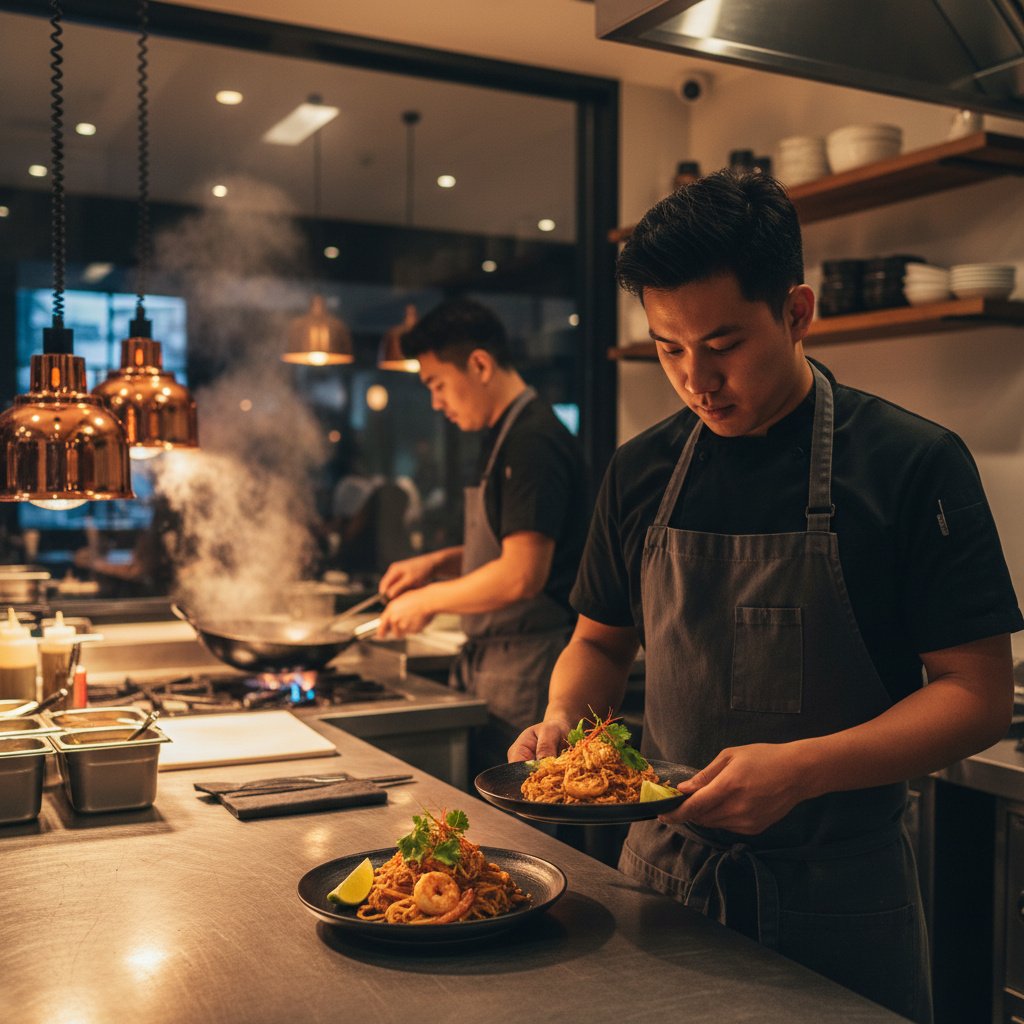
I still remember the sensory shock of entering my first commercial kitchen. The heat hitting your face like a physical wall. The rapid-fire clatter of metal pans hitting burners. The intense aroma of roasted chilies and hot garlic mixing with industrial sanitizers. For any newcomer, it is terrifying. For a newly arrived emigrant, it can feel like landing on another planet.
Every year, thousands of Thai expats step off planes and look for a foothold in the American economy. Often, that first step is onto the tiled floor of a restaurant kitchen. It is hard, fast, and demanding work. But it is also one of the most reliable springboards to a successful life in the United States. Finding that first job Thai expat America requires a mix of street smarts, realistic expectations, and knowing where to turn for help.
You do not need a flawless American accent or a fancy culinary degree to start. What you actually need is a reliable plan of attack. Let us look at how you can navigate the hiring process and turn an entry-level role into a thriving career.
Step 1: Sort Out Your Legal Foundation
Let us address the elephants in the room immediately. You will find plenty of online job boards promising easy visa sponsorships for entry-level positions. This is a common illusion. In reality, legal work authorization is the fundamental baseline before you start looking for most Thai restaurant jobs USA.
American immigration laws are strict, and restaurant hiring managers are generally not equipped to sponsor visas for dishwasher or prep roles. Before you print a single resume, ensure your paperwork is in order. Keep your work authorization documents clean, organized, and ready to present. If a hiring manager asks for proof that you can legally work, having those papers ready in a neat folder demonstrates that you are professional and ready to hit the ground running.
Step 2: Know Where to Cast Your Net
When you are seeking entry level Thai restaurant work, it is tempting to only target high-end, famous local Thai spots. That is a mistake. To secure your first job, you must widen your horizons.
Look at neighborhoods with thriving food cultures, family-owned spots, and cross-cultural fusion joints. Think about school cafeterias, hotel kitchens, and general food-service settings. Take the story of Yuwadee Poophakumpanart. When she arrived in the Twin Cities, she did not just sit around waiting for the perfect Thai dining room to hire her. She gathered cooking experience wherever she could—working in schools, local bars, and regional kitchens. She used those early years to build her stamina, save money, and improve her English before finally opening her own successful Thai cafe in St. Paul.
Expanding your geographic and culinary search increases your odds of finding an open door. Do not be proud. A dishwashing shift at a local diner pays the bills and builds your American work history just as well as a prep shift at a five-star Thai bistro.
Step 3: Keep Your Resume Clean and Action-Oriented
Many applicants ruin their chances before they ever shake the owner’s hand. How? By turning their resume into a long, rambling narrative. Busy kitchen managers do not have time to read a story. They want to glance at a piece of paper for five seconds and know exactly what you can do.
Use simple, direct language to list your experience. Focus on practical tasks. If you worked in a kitchen in Thailand, do not just write “helped in kitchen.” Instead, use active bullet points:
- Prepared ingredients and chopped vegetables under tight deadlines.
- Cleaned and sanitized workstations according to safety guidelines.
- Collaborated with a five-person kitchen team to serve over 150 guests daily.
- Controlled inventory and assisted with stock rotation and storage.
If you have never worked in a restaurant, focus on transferable skills. Have you ever worked on a family farm? Have you done warehouse work or retail? Show that you can stand on your feet for eight hours, handle physical labor, and work as part of a busy squad. Keep your resume to a single page.
Step 4: Understand the American Interview
In many Southeast Asian cultures, humility means staying extremely quiet and waiting to be told what to do. In a fast-paced American kitchen, quietness can sometimes be mistaken for confusion or lack of interest. You do not need to be loud, but you must be clear and direct.
During the interview, the owner or chef is looking for answers to three basic questions: Will you show up on time? Will you work hard without complaining? Can you take direction without getting defensive? These are useful Thai job search tips USA to remember.
Arrive ten minutes early. Dress neatly. Make eye contact, smile, and demonstrate that you are eager to learn. If the manager asks you a question you do not understand, do not just nod and say yes. It is much better to say, “Could you say that again, please? I want to make sure I understand.” This shows honesty and a high respect for accuracy—traits that save restaurants money on costly food waste.
Step 5: Leverage Your Community Connections
The best job boards in the world cannot compete with a recommendation from someone who already works in the building. The immigrant restaurant community survives on word-of-mouth. It is a whisper network that runs through local temples, community grocery stores, and regional Facebook groups.
Talk to everyone you meet. Let your friends, family members, and neighbors know that you are looking for work and are willing to take entry-level shifts. When Yuwadee Poophakumpanart wanted to make her next big business move, it was an alert friend who tipped her off to a closing building. The same applies to getting hired. Often, an owner needs an extra prep cook by tonight, and they will hire the cousin of their trusted server before they ever bother creating an online listing.
Step 6: Choose Your Domain Strategically
Should you work in the kitchen (Back of House) or the dining room (Front of House)? Match this choice directly to your language skills, not your ego.
If your English is still developing, the Back of House is your sanctuary. Roles like dishwasher, prep cook, or kitchen helper allow you to learn the flow of an American kitchen without the pressure of speaking to guests. You will pick up English terms naturally through daily exposure while proving your worth with your hands.
If your conversational English is already solid, look at Front of House helper roles. Start as a busser, food runner, or host. These positions allow you to observe how servers interact with customers and handle transactions, providing a direct pathway to lucrative serving roles later on.
Step 7: Accelerate the Job Hunt with Modern Tools
While walking from door to door with paper resumes is a time-tested strategy, the modern world moves faster. Smart hiring managers are increasingly looking for ways to bypass generic job boards clogged with unqualified applicants.
This is where specialized platforms come in. Utilizing platforms like ThaiStaff.Now job matching can dramatically shorten your search. Instead of competing with thousands of general applicants on massive websites, these targeted matching services connect you directly with Southeast Asian and Thai restaurant owners who understand your background and value your unique skills. It acts as a digital bridge, matching your availability and experience with owners who need reliable help right now.
The Long-Term Game
Your first job in America is not your final destination. It is a classroom where you are being paid to learn. Every plate you wash, every onion you dice, and every customer interaction is a lesson in how the American hospitality backend functions. Work hard, stay reliable, and use these early steps to build the foundation for your long-term dreams.
Book a 15 minute discovery call to find out more today at https://digifidelis.com/calendar/


0 Comments