
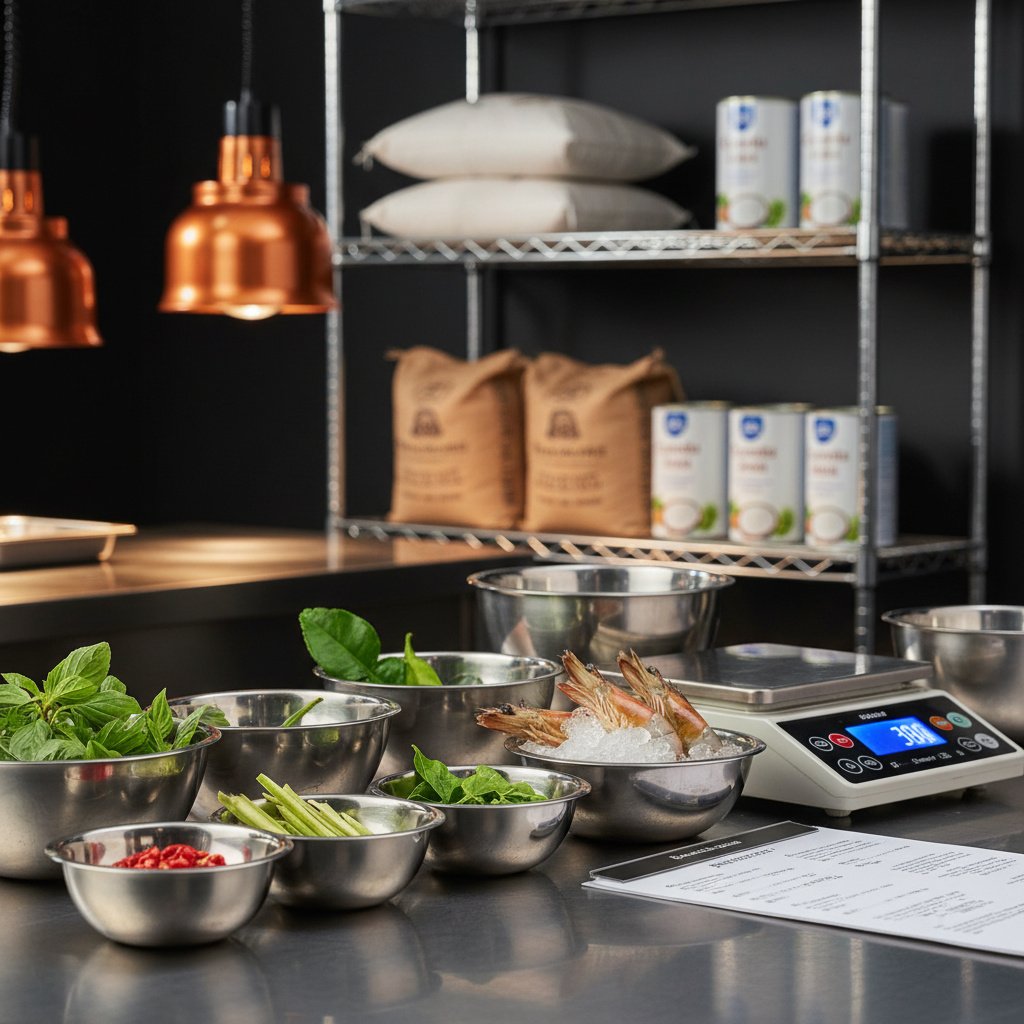
Running a successful Thai restaurant in the United States is a balancing act between rich culinary heritage and unforgiving operational math. Every bowl of Tom Yum, plate of Pad Thai, and clay pot of Panang curry relies on a delicate harmony of flavors: sweet, sour, salty, bitter, and fiery heat. Yet behind the fragrant steam of the wok line lies a relentless operational challenge: ingredient price volatility, sensitive shelf lives, and thin profit margins.
For independent operators and kitchen managers, managing food costs is not about cutting corners or watering down authentic recipes. It is about building an operating system where every ounce of protein, every bunch of holy basil, and every tin of coconut milk is accounted for. Operating a profitable Thai food business requires transforming cost control from a stressful monthly accounting surprise into a disciplined daily kitchen routine.
The Target: Understanding Food Cost Benchmarks
To control your numbers, you must first define what health looks like. Across the full-service restaurant sector, a healthy food cost percentage generally hovers between 28% and 35% of total food sales. Combined with labor, your prime cost should ideally stay between 55% and 60% of total revenue.
To calculate your actual food cost percentage for any given period, use the standard equation:
(Beginning Inventory + Purchases – Ending Inventory) ÷ Total Food Sales = Food Cost Percentage
If your beginning inventory is $12,000, you purchase $8,000 in goods, and your ending inventory sits at $11,000, your Cost of Goods Sold (COGS) is $9,000. If food sales for that period were $27,000, your food cost is 33.3%. When this number creeps past 36%, Thai restaurants quickly bleed cash—often due to invisible kitchen leaks rather than sluggish sales.
The Thai Menu Vulnerability: Ingredient Volatility
Food cost control in Thai cuisine presents specific challenges rarely faced by standard Western diners or pizzerias. Thai food relies heavily on two volatile categories: delicate, imported or specialty perishables, and fluctuating premium proteins.
Consider the core pantry. Fresh Thai holy basil (krapow), bird’s eye chilies, lemongrass, galangal, kaffir lime leaves, and Asian eggplants spoil rapidly if improperly handled. Simultaneously, imported essentials like premium jasmine rice, specialty fish sauces, and coconut milk are subject to import tariffs, freight disruptions, and currency shifts. Add high-cost proteins like flank steak, jumbo shrimp, and duck, and a small shift in supplier pricing can quietly erase the profit margin from your top-selling noodle and curry dishes.
The antidote is dynamic recipe costing. Static menus priced two years ago on napkin estimates are fatal in modern dining. Every core recipe must be broken down to the gram and fluid ounce, with pricing recalculated whenever core wholesale ingredients swing by more than 5% to 10%.
Standardization: The Bedrock of Portion Discipline
The fastest way to reduce costs in a Thai restaurant is standardization on the line. When a line cook cooks by intuition rather than standard measures, food cost spins out of control. An extra two ounces of beef in an order of Pad See Ew or an extra three shrimp in a Tom Kha bowl may feel generous to the cook, but over hundreds of covers a week, that invisible generosity drains thousands of dollars straight out of your net profit.
Execute these three operational fixes immediately:
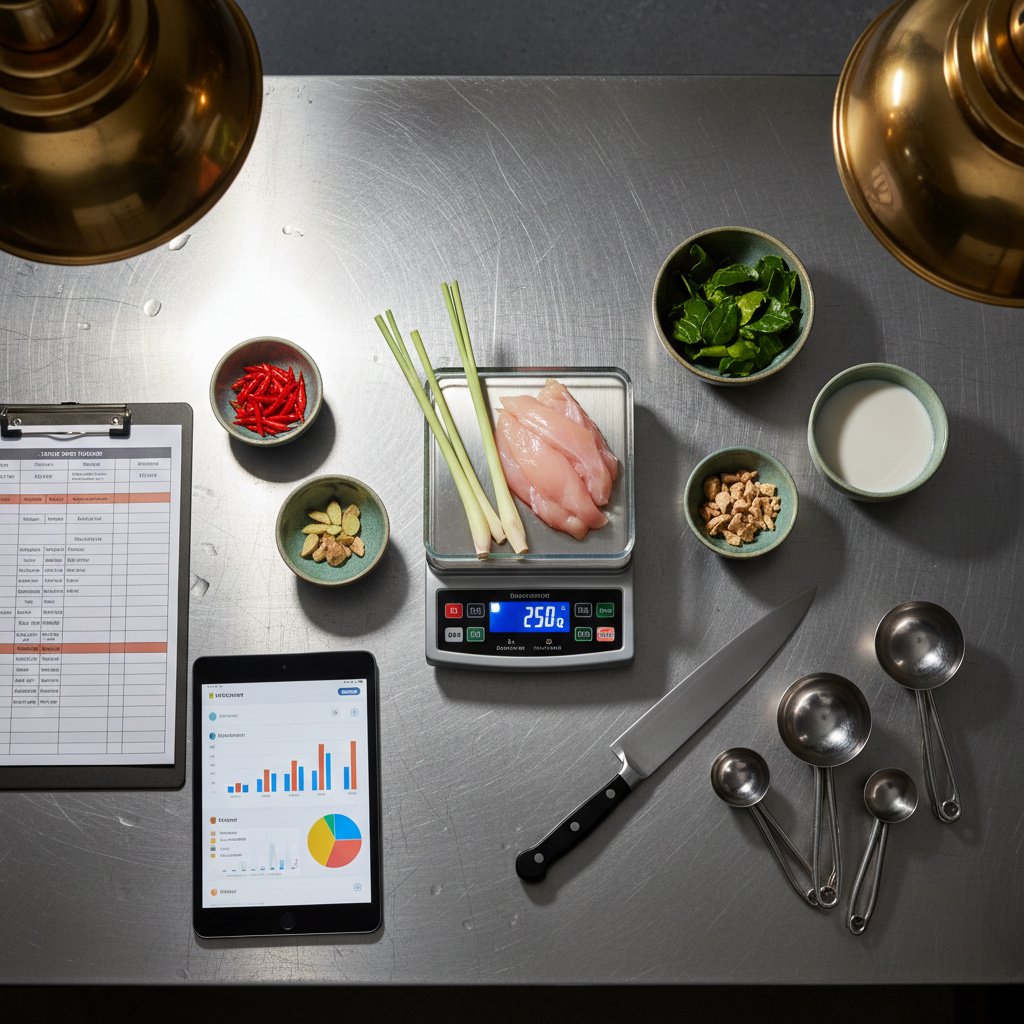
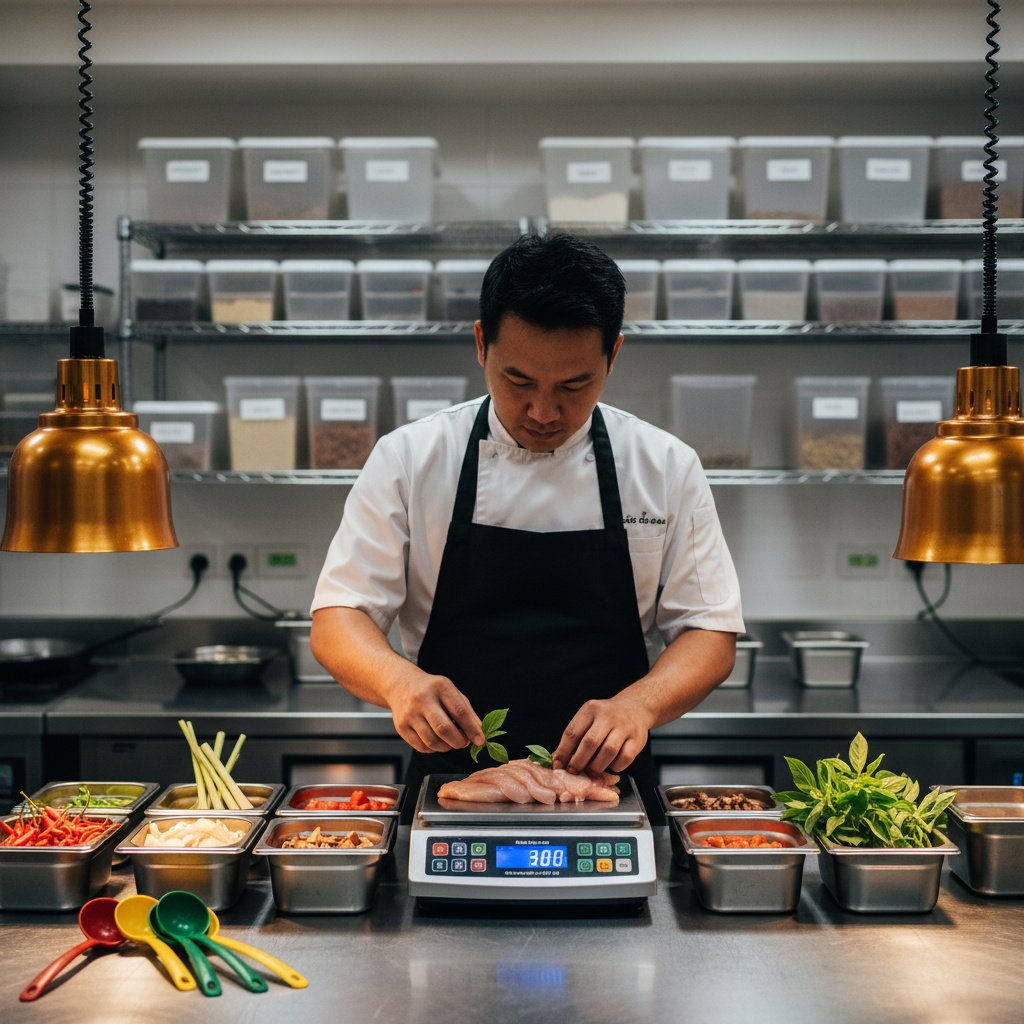
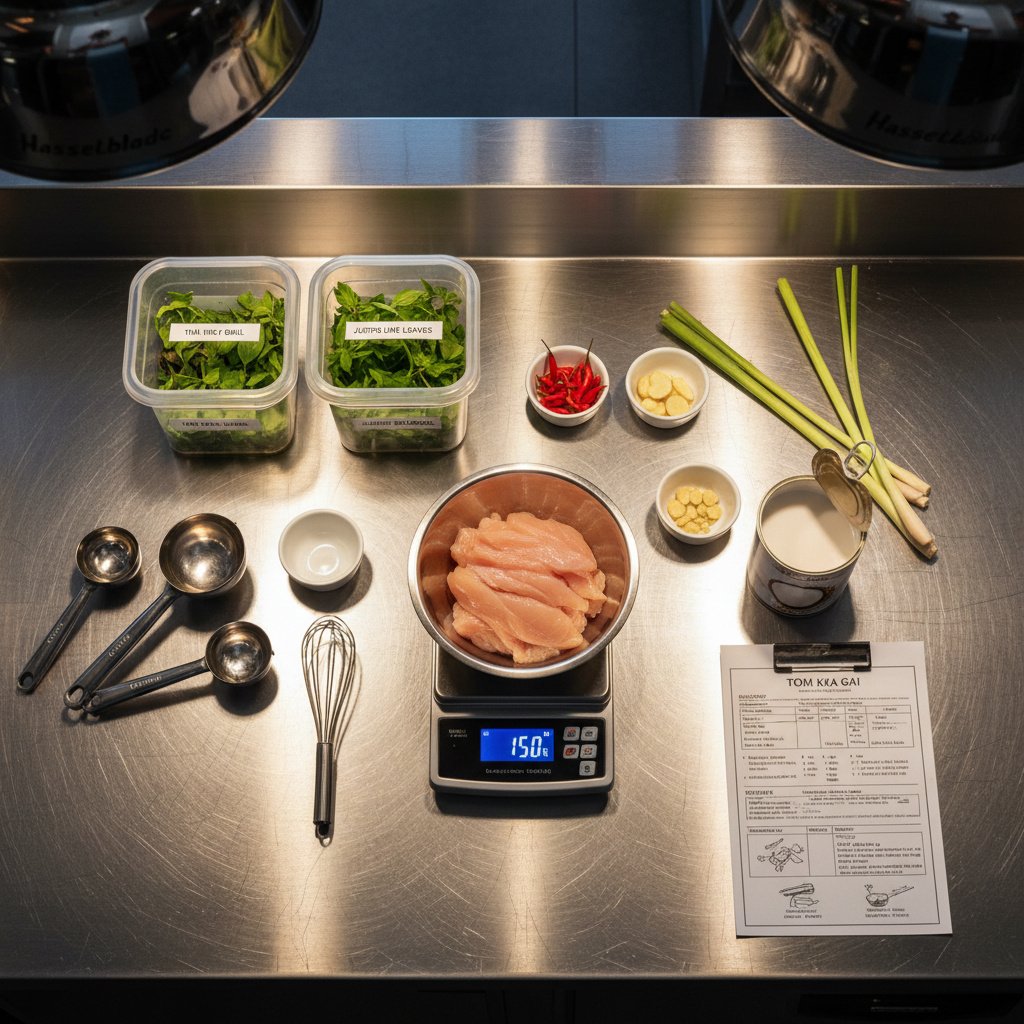
- Digital Scales and Portion Ladles: Provide pre-sized ladles for curry sauces and calibrated measuring cups for wok sauces. Weigh raw proteins into individually portioned baggies or trays during morning prep.
- Laminated Recipe Cards with Photos: Place visual spec sheets at every station. These cards should detail prep yield, exact ingredient weights, cooking sequence, and a clear photo of the finished, correctly portioned plate.
- Standardized Batch Prep: Curries, marinades, and stir-fry base sauces should be prepared in batch sizes governed by strict written yield formulas. Never allow cooks to freestyle base sauces during service.
Inventory Management: Moving Beyond Guesswork
Effective Thai restaurant inventory management demands structure, consistency, and adherence to the “First In, First Out” (FIFO) principle. Leaving stock counting to monthly checks ensures you only notice financial leaks weeks after the money has vanished.
Structure your stock control around strict par levels: the minimum quantity of an item required on hand to meet service demands between delivery cycles, plus a lean safety buffer. Par levels must reflect recent Point of Sale (POS) sales data, adjusting for weekend rushes or slower mid-week shifts, rather than gut feeling.
Conduct weekly inventory audits on high-value categories, known in inventory management as the “Key Item” or “ABC” method:
- High-Value Daily/Weekly Counts (Category A): Shrimp, beef, chicken breast, cooking oil, bulk jasmine rice, and specialty seafood.
- Bi-Weekly Counts (Category B): Fresh herbs, produce, curry pastes, and coconut milk.
- Monthly Counts (Category C): Dry spices, sugar, shelf-stable canned goods, noodles, and paper takeout containers.
When deliveries arrive, verify counts and weights before signing delivery invoices. Keep storage spaces organized so items can be counted in minutes, ensuring newer shipments sit behind older stock to prevent costly spoilage.
Real-Time Waste Tracking: Stopping the Leaks
You cannot manage what you do not measure. A kitchen without a waste log treats spoiled ingredients as an unavoidable cost of doing business. In reality, food waste is lost cash thrown straight into the dumpster.
Hang a physical clipboard or install an inexpensive tablet beside the prep table and trash disposal area. Every team member must record:
- Date and time
- Item name and exact quantity (e.g., “1.5 lbs Thai basil” or “3 orders Green Curry chicken”)
- The root reason: Spoilage, over-prep, burned on the wok, line drop, or customer return
- Staff initials
Reviewing waste logs weekly reveals clear patterns. If fresh basil is consistently tossed due to slime and mold, par levels must be reduced or storage methods improved. If curries are frequently discarded at closing, batch sizes must be tightened. Holding staff accountable for logging waste shifts the kitchen culture from casual disregard to active stewardship.
Strategic Menu Engineering
Managing costs does not mean shrinking portions to the point of customer dissatisfaction. Instead, use menu engineering to steer diner decisions toward high-margin items.
Analyze your menu items across two metrics: profitability (contribution margin) and popularity (sales volume). Group your dishes into distinct categories:
- Stars (High Profit, High Popularity): Protect these dishes. Maintain strict quality and consistent portioning, and give them prime real estate on your physical and digital menus.
- Plowhorses (Low Profit, High Popularity): Often your signature Pad Thai or beef noodle dishes. Do not remove them, but consider minor price adjustments, subtle protein portion re-balancing, or pairing them with high-margin appetizers like spring rolls or Thai iced tea.
- Puzzles (High Profit, Low Popularity): Specialty dishes like regional curries or whole fried fish with high margins but slow sales. Train service staff to suggest them, redesign their menu descriptions, or feature them as weekend chef specials.
- Dogs (Low Profit, Low Popularity): Complex dishes with expensive, perishable ingredients that rarely sell. Cut them from the regular menu completely to streamline prep and eliminate waste.
Process Over Panic
Adopting modern restaurant inventory software integrated with your POS platform can simplify theoretical food cost calculations, alert you to pricing variances, and streamline purchase orders. However, technology merely amplifies existing kitchen discipline; it cannot replace it.
Treat food cost control not as an emergency response to a poor quarterly P&L, but as an essential craft practiced every single service. By setting accurate pars, enforcing portion discipline, logging waste, and engineering menus strategically, Thai restaurant owners can preserve the soul of their culinary traditions while building a durable, resilient, and highly profitable business.
Book a 15 minute discovery call to find out more today at https://digifidelis.com/calendar/

0 Comments