
Running a successful Thai dining room in the United States requires balancing complex, aromatic culinary traditions with strict fiscal discipline. Between volatile shipping costs for imported specialty ingredients and climbing domestic poultry and produce rates, operating margins face persistent pressure. For many operators, profitability feels like a moving target. Yet achieving a sustainable, highly profitable Thai food business does not require diluting recipes or sacrificing authentic flavors. Instead, long-term stability comes from viewing food cost management as an interconnected operational system.
Establishing the Benchmark: Food Cost and Prime Cost
In full-service Thai operations, an ideal food cost percentage sits reliably between 28% and 35%. When food costs climb past 35%, even packed dinner seatings can leave a dining room cash-poor at the end of the month. However, evaluating cost of goods sold in isolation provides an incomplete picture. Successful operators monitor prime cost—the combined total of food costs and labor costs.
Because Thai cuisine relies heavily on fresh preparation—from hand-crushed chili pastes and julienned green papaya to meticulous protein trimming—labor and food spend are tightly linked. If your kitchen spends hours prepping whole birds or peeling produce without tracking the resulting yields, labor expenses climb while unmeasured waste accumulates. Keeping combined prime costs at or below 60% of total revenue provides the operating cushion needed to absorb unexpected price spikes.
Pillar 1: Systematic Recipe Costing
Authentic Thai dishes feature layers of seasoning, herbs, and sauces. Because a single stir-fry requires base oils, fish sauce, oyster sauce, palm sugar, aromatics, proteins, and produce, dishes often suffer from unseen margin erosion. Intuitive cooking or calculating prices based on rough competitor checks leaves profits exposed to market swings.
Every single menu item must have an exact, documented recipe cost sheet built from true yields rather than raw weight:
- Account for Trim and Cook Yield: One pound of raw chicken or beef does not yield one pound of stir-fried meat. Evaporation, fat loss, and trimming reduce the usable volume, raising the real cost per cooked ounce.
- Break Down Complex Sauces: Standardize your house pad Thai sauce, green curry base, and stir-fry brown sauces by volume and batch cost. Measure every tablespoon of tamarind paste and fish sauce going into the pot.
- Focus on High-Volume Drivers First: You do not need to recost fifty dishes in an afternoon. Audit your top ten bestsellers first—typically Pad Thai, Drunken Noodles, Pad See Ew, Tom Yum, and Green Curry. Because these items generate the bulk of your kitchen’s volume, small savings here produce immediate balance-sheet results.
- Track Volatile Staples: Keep updated supplier cost records for fast-moving staples like coconut milk, jasmine rice, cooking oil, and eggs, repricing menu contributions when vendor rates shift permanently.
Pillar 2: Eliminating Creep Through Strict Portion Control
Over-portioning is often an invisible drain on a restaurant’s bottom line. When a line cook adds an extra ounce of chicken breast or two extra shrimp to every bowl of curry during a busy Friday rush, guests will not detect the difference. Your balance sheet, however, records a substantial loss. Adding just one unmeasured ounce of protein across 250 plates a day totals over fifteen pounds of unaccounted inventory leaving the kitchen every day.
To reduce costs in a Thai restaurant, remove guesswork from the prep line:
- Dedicated Portioning Tools: Assign specific, color-coded scoops and ladles for curry bases, rice, and bulk sauces so volume remains identical across shifts.
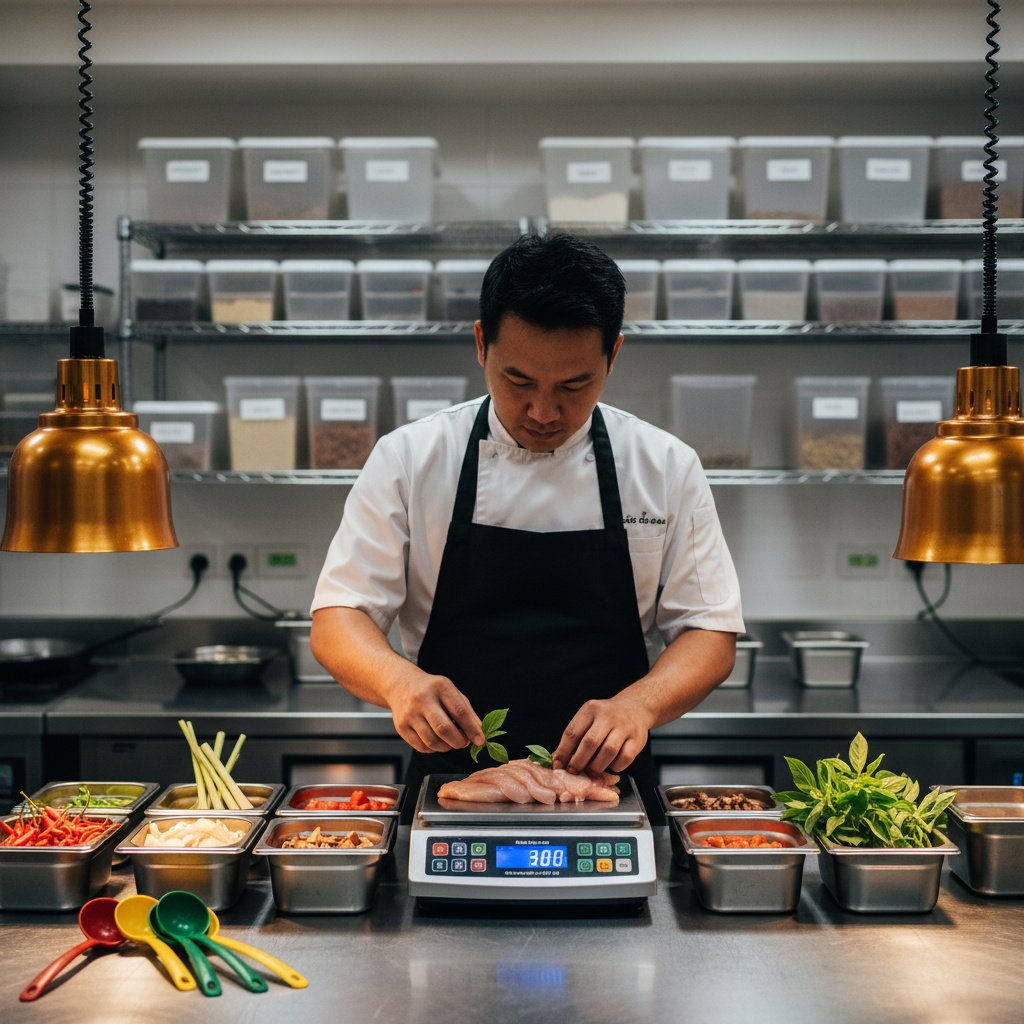
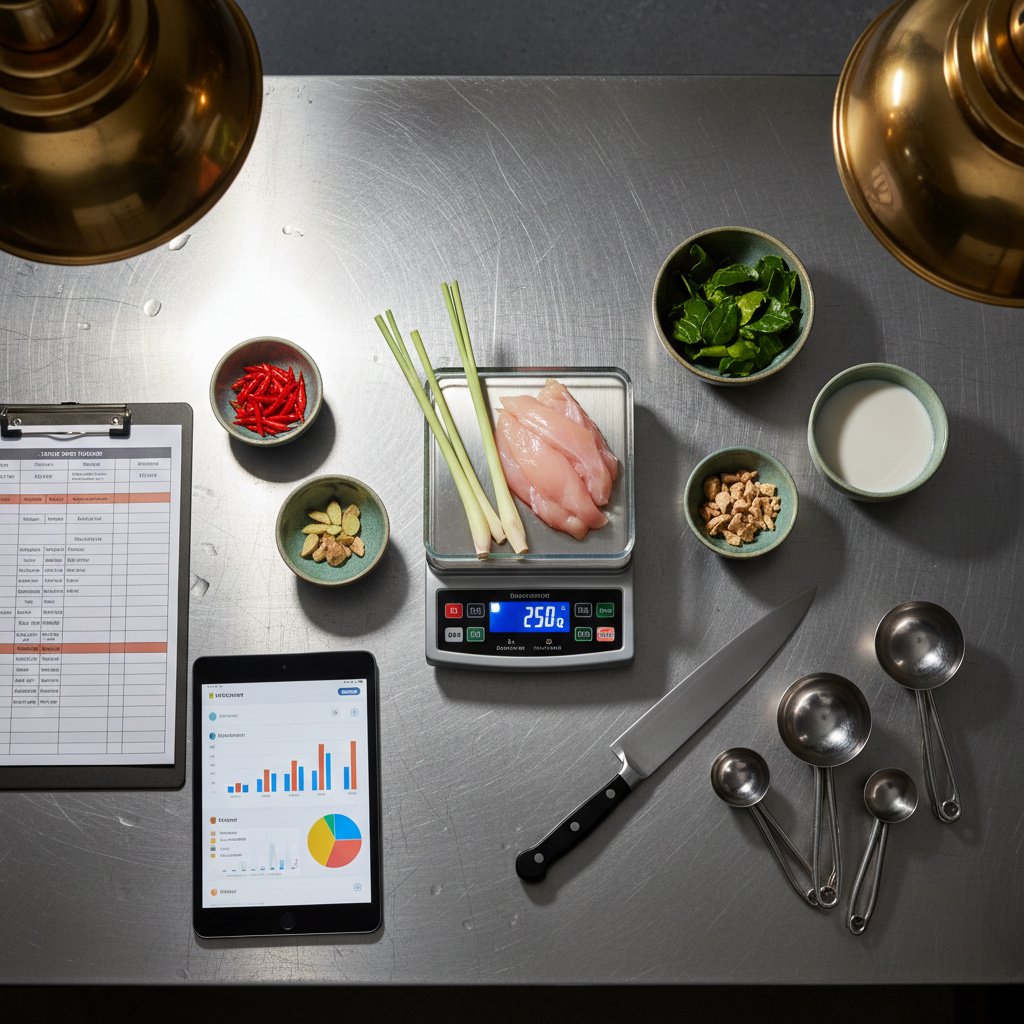
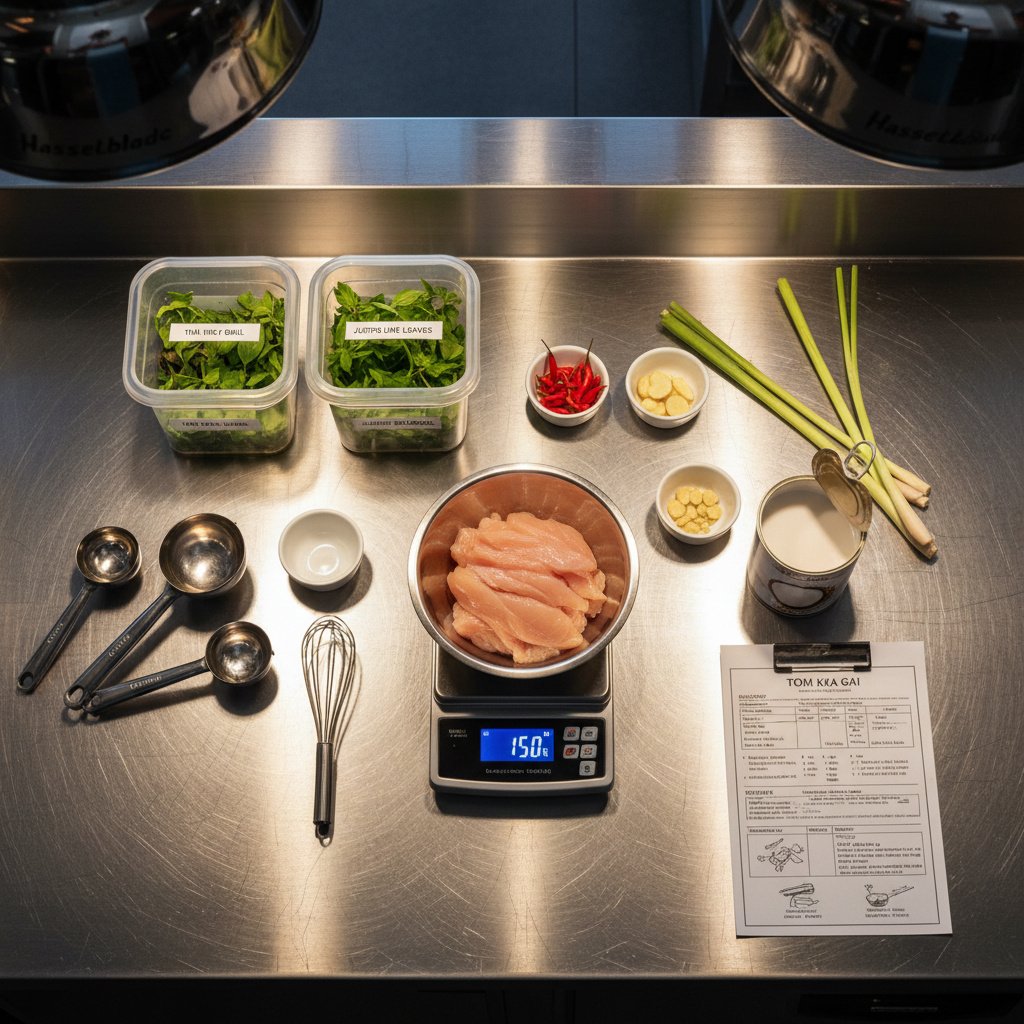
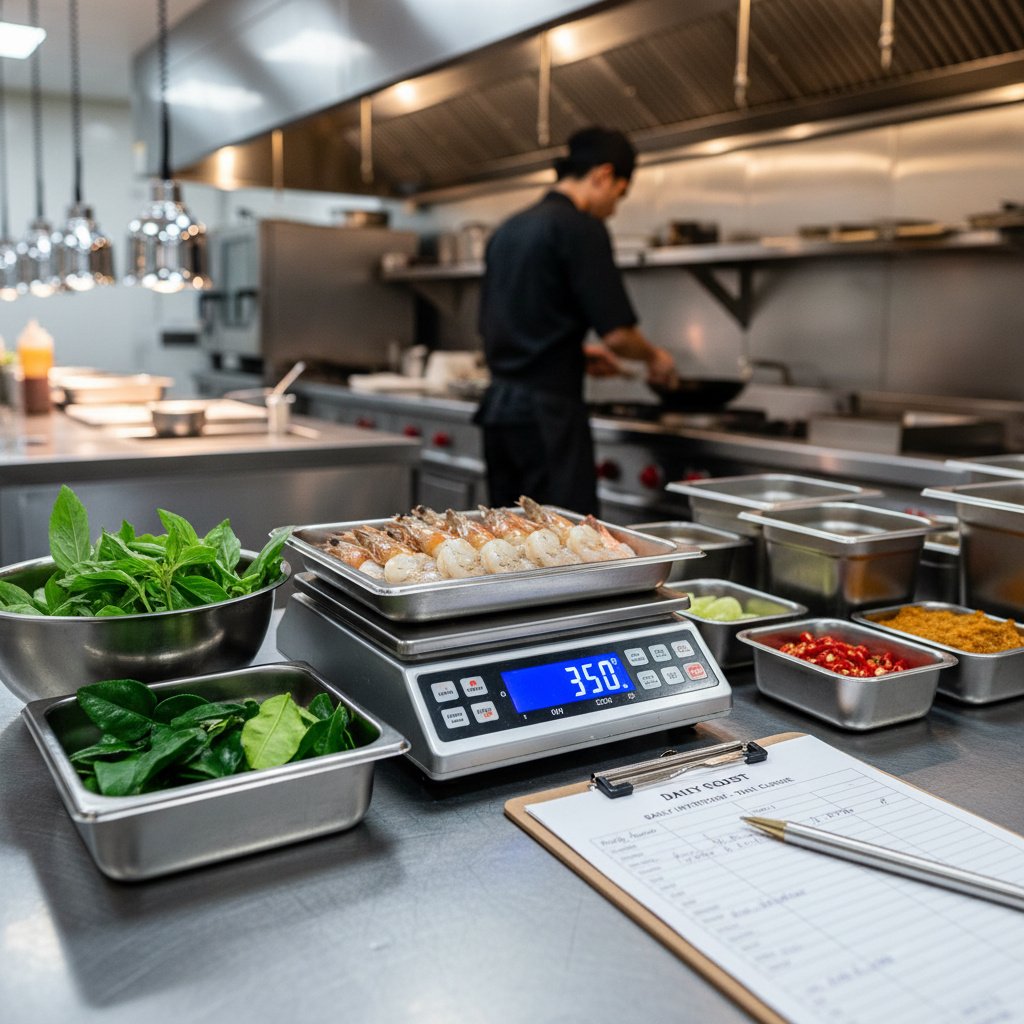
- Digital Scales for Proteins: Require kitchen staff to weigh sliced beef, chicken, pork, and seafood into daily portion bags or standardized trays during morning prep.
- Visual Plating Guides: Post photo guides above the pass showing exact counts for shrimp, tofu cubes, and vegetable garnishes. Consistency protects food cost control in Thai cuisine while ensuring guests receive an identical experience on every visit.
Pillar 3: Active Thai Restaurant Inventory Management
Inventory left uncounted is capital left unmanaged. Establishing rigorous inventory discipline prevents waste, deters theft, and ensures stock levels match actual table turns.
Start by establishing dynamic par levels. Rather than ordering fixed quantities out of habit, calculate par levels using historical sales data, seasonal variations, and vendor delivery schedules. Maintaining a lean safety buffer prevents over-ordering perishable produce while guarding against supply disruptions.
Implement a First-In, First-Out (FIFO) stocking procedure throughout walk-ins and dry storage. Highly perishable essentials—such as Thai basil, kaffir lime leaves, lemongrass, bean sprouts, and Thai eggplants—deteriorate rapidly when trapped behind fresh deliveries. Require receiving staff to label every carton with arrival dates, unpack crates into visible, transparent containers, and place older items directly in front.
Pair monthly or weekly complete inventory counts with daily spot counts on high-value items. Tracking proteins, premium seafood, specialty cooking oils, and bulk sauces daily keeps inventory numbers tight without overburdening kitchen leadership.
Pillar 4: Costed Waste Tracking
Food waste is inevitable in high-volume kitchens, but unmonitored waste conceals systemic flaws. When burned noodles, overcooked rice, expired coconut milk, or wilted herbs simply end up in the trash bin without documentation, management loses the ability to diagnose prep mistakes.
Mount a dedicated waste log clipboard near prep areas and trash stations. Every time ingredients are discarded, staff must record:
- The item name and precise quantity or weight.
- The operational reason (spoilage, prep error, dropped plate, order return).
- The estimated wholesale dollar cost.
Reviewing these logs weekly reveals whether waste stems from over-purchasing, poor walk-in refrigeration temperatures, incorrect batch sizes, or kitchen execution errors. When line cooks see the literal dollar values tied to prep waste, awareness across the entire team increases.
Pillar 5: Menu Engineering and Cross-Utilization
Modern menu engineering uses data to drive guests toward your most profitable items. Categorize your menu by popularity and gross margin contribution to identify standout earners, high-volume items needing margin adjustments, and unprofitable dishes that consume prep space without driving revenue.
Cross-utilization remains one of the strongest operational levers for Thai menus:
- Ingredient Overlap: Ensure fresh aromatics like galangal, lemongrass, and cilantro roots serve multiple preparations, moving through curries, broths, and marinades before losing freshness.
- Repurposing Vegetable and Herb Trim: Use clean vegetable ends, herb stems, and poultry frames to build deeply flavored house stock bases for Tom Yum and Tom Kha broths rather than discarding them.
- Dynamic Specials: Deploy daily lunch specials or seasonal chef features to channel slow-moving prep into attractive, profitable offerings before shelf life expires.
Smarter Vendor Purchasing Without Quality Compromise
Controlling costs does not require switching to lower-grade produce or synthetic flavorings. Thai cuisine relies entirely on vibrant, clean aromatics. Preserving that flavor profile while protecting cash flow requires sharper purchasing practices.
Audit vendor invoices line-by-line upon delivery. Wholesale food distributors regularly introduce price adjustments on dry goods without explicit warnings. Set price-alert thresholds for core volume items like jasmine rice, sugar, soy sauce, and proteins. When imported fresh herbs experience extreme off-season price surges, adjust plate compositions slightly—relying on core flavor bases during cooking while moderating raw finishing garnishes.
Consistency Drives Profitability
Sustainable profitability in a Thai restaurant comes from disciplined execution, measured portions, and transparent inventory tracking. By connecting actual inventory usage to daily sales data, restaurant owners can pinpoint variances immediately. Treat every aromatic leaf, ladle of sauce, and ounce of protein with operational respect. In doing so, you protect the authenticity of your culinary vision while building a durable, profitable enterprise.
Book a 15 minute discovery call to find out more today at https://digifidelis.com/calendar/

0 Comments