
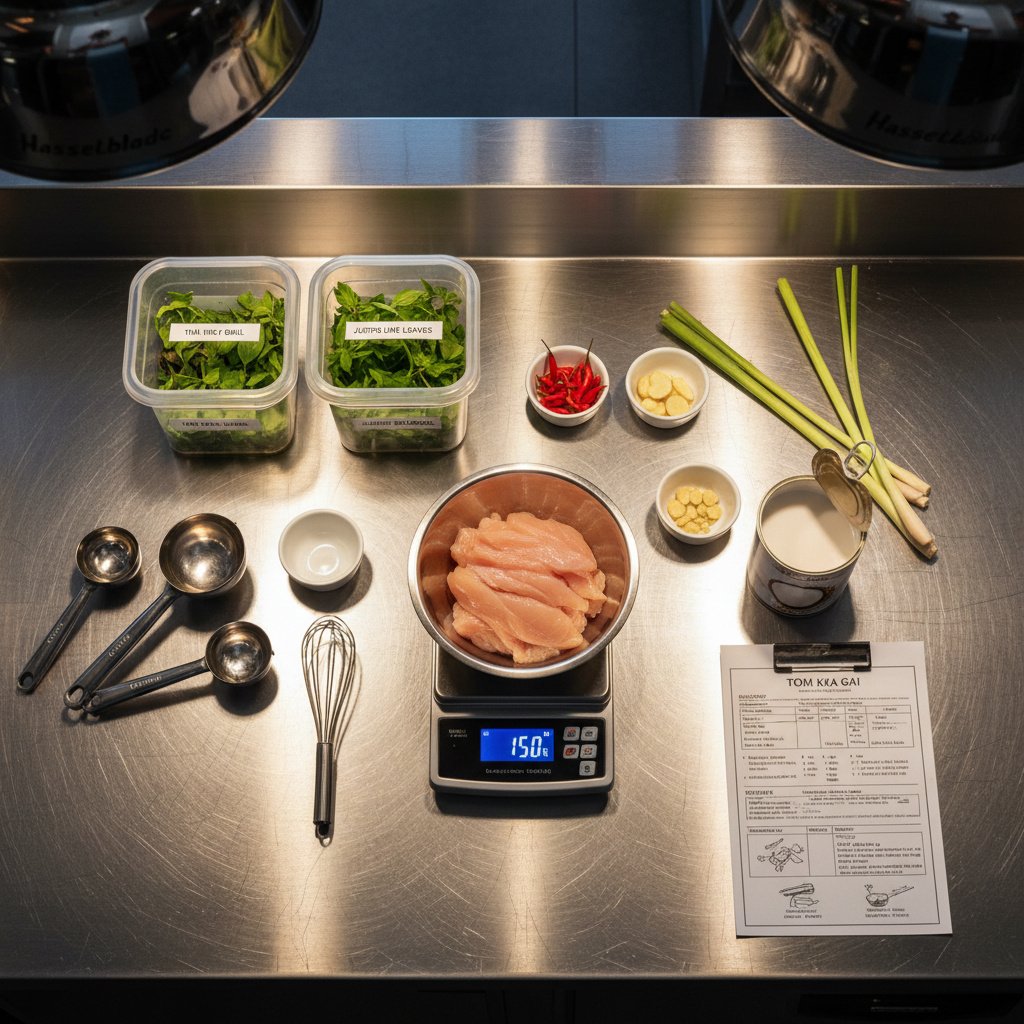
Running a successful Thai restaurant in the United States requires balancing authentic culinary heritage with commercial precision. Behind every fragrant bowl of Tom Yum and every steaming plate of Pad Thai sits a complex web of costs. For many independent operators, the kitchen operates on muscle memory and tradition rather than strict standardization. While this intuitive approach can yield incredible flavor, it often hides the slow leak of kitchen profitability.
Implementing disciplined Thai restaurant cost management does not mean cutting corners or diluting signature flavors. Instead, it means building a repeatable operational system where recipe costing, portion control, inventory rotation, and strategic menu engineering work in harmony to ensure a sustainable, profitable Thai food business.
Setting the Benchmark: Recipe Costing and Target Margins
In the American restaurant landscape, a healthy food-cost benchmark generally lands between 28 and 35 percent of total sales. However, hitting that range requires understanding profitability at the dish level rather than relying solely on end-of-month accounting statements. If your best-selling dishes are underpriced or over-portioned, high sales volume only accelerates margin loss.
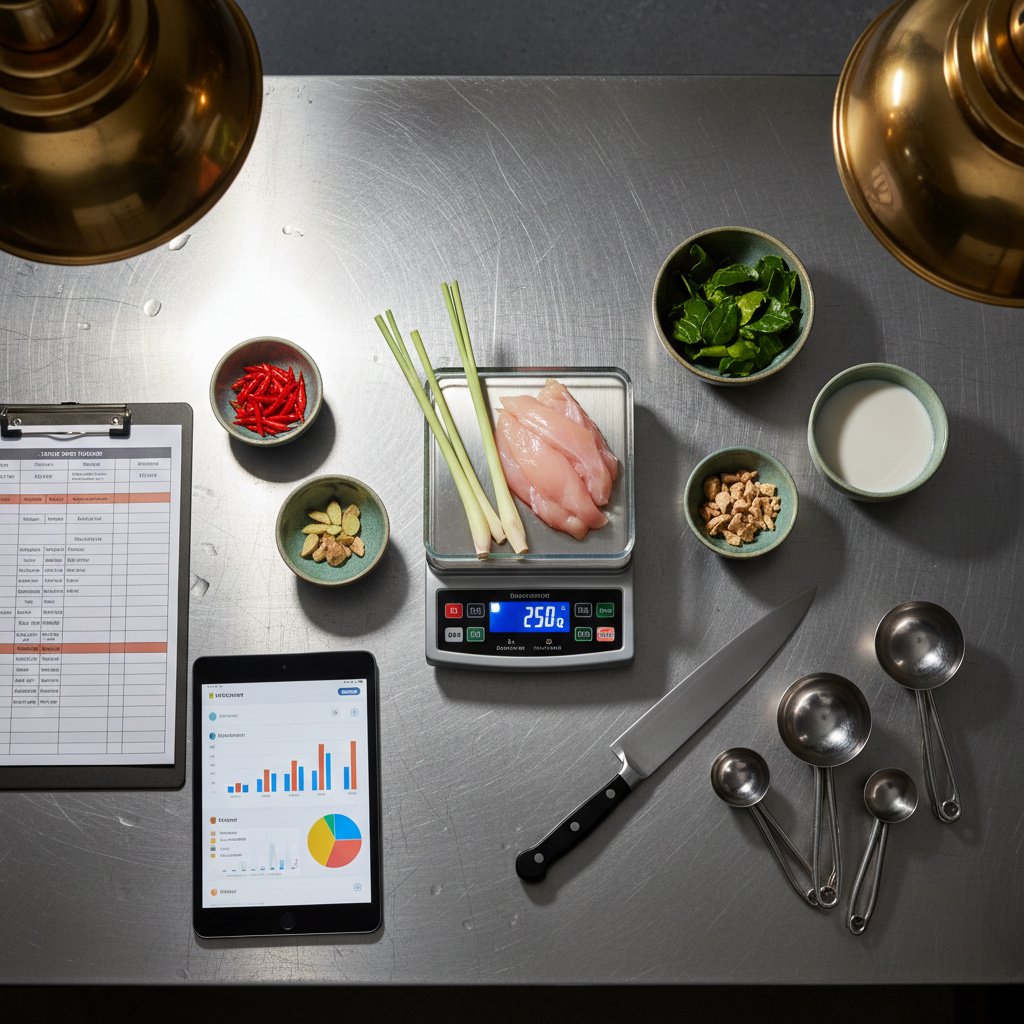
Effective food cost control in Thai cuisine begins with granular recipe costing. Every component of a dish must be weighed, measured, and priced out, including:
- Primary proteins (chicken breast, flank steak, shrimp, tofu)
- Pantry staples (jasmine rice, rice noodles, coconut milk)
- Specialty aromatics and produce (lemongrass, galangal, Thai basil, bird’s eye chilies)
- Hidden consumables (fryer oils, fish sauce, palm sugar, tamarind paste, takeout garnish)
Calculating the direct cost per plate against its retail price reveals the actual contribution margin. Consider a staple like green curry: if the price of coconut milk or boneless chicken rises by just fifteen percent, an unmonitored recipe can quietly drop from a reliable moneymaker into a breakeven plate. Recalculate your top ten sellers monthly to detect price creep before it impacts cash flow.
Standardization: The Power of Strict Portion Control
In high-speed wok stations, line cooks often grab proteins and vegetables by the handful. An extra ounce of protein or a heavy pour of sauce might feel insignificant during a Friday night rush, but across two hundred covers a day, small variations create massive losses. One extra ounce of flank steak on every Pad See Ew order translates to hundreds of dollars of unaccounted inventory leaving the walk-in every single month.
To reduce costs in a Thai restaurant without sacrificing quality, standardize every step of assembly:
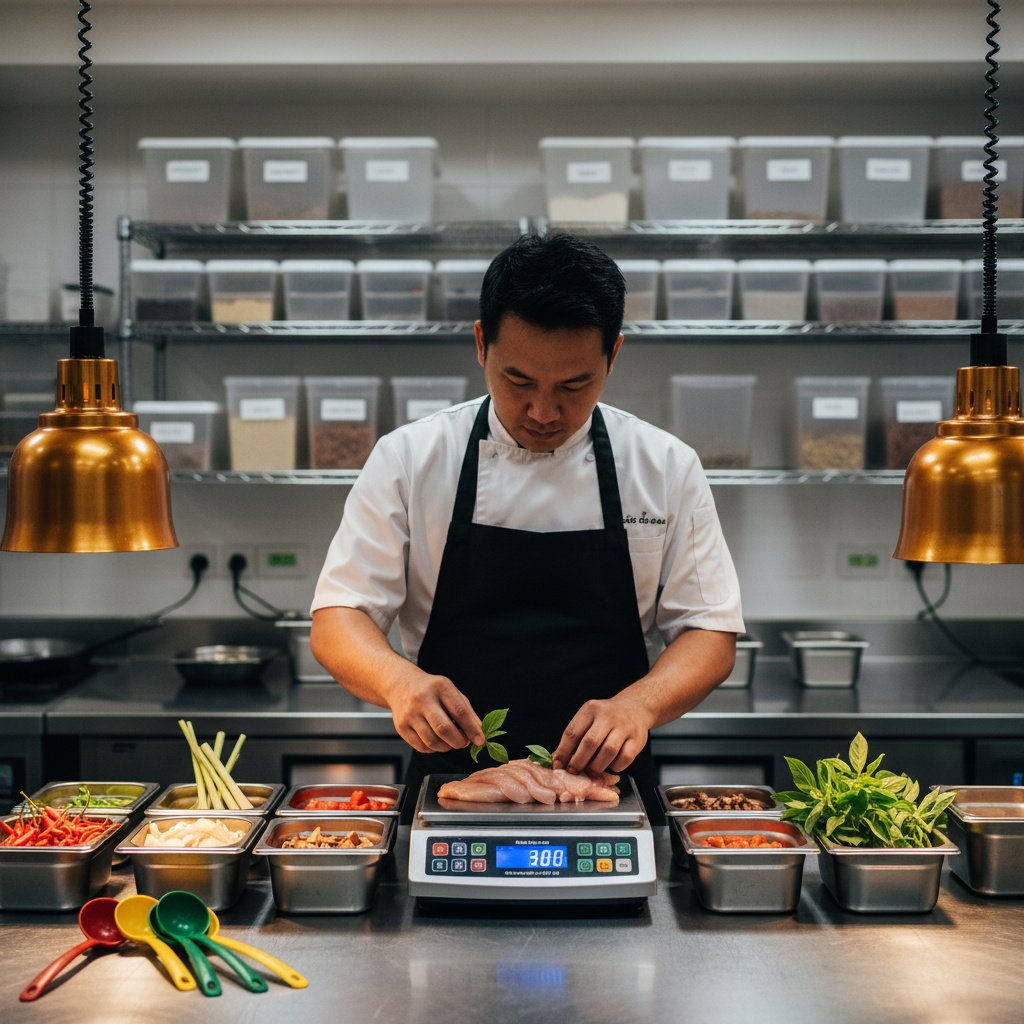
- Dedicated Utensils: Use color-coded scoops for curry pastes, standardized ladles for signature stir-fry sauce bases, and pre-portioned containers for proteins.
- Digital Prep Scales: Require kitchen staff to weigh meat and seafood during morning prep shifts rather than estimating portion weights at the wok.
- Bilingual Recipe Cards: Mount laminated, photo-illustrated recipe guides above prep tables, clearly stating exact portion weights and build orders.
Equally critical is training staff on yield awareness. A case of whole poultry or fresh produce does not yield 100 percent usable product. Trimming chicken, peeling aromatics, and cleaning seafood creates shrinkage. Pricing dishes based on raw purchase weight rather than true cooked yield artificially inflates expected profit margins.
Disciplined Thai Restaurant Inventory Management and Waste Tracking
Inventory on restaurant shelves represents sitting cash. Over-ordering ties up capital and dramatically increases the risk of spoilage, particularly for delicate Thai herbs and fresh produce. Establishing a lean Thai restaurant inventory management system protects your bottom line against waste and volatile market pricing.
Implement dynamic par levels based on actual historical consumption and vendor delivery schedules rather than kitchen intuition. Track usage trends across several weeks, calculate average daily consumption, and factor in a modest safety buffer for peak weekend volume. When ordering perishable items like kaffir lime leaves, cilantro, and bean sprouts, align order quantities strictly with your par thresholds.
Maintain consistent walk-in hygiene and rotation protocols:
- First In, First Out (FIFO): Ensure all arriving stock goes behind existing inventory to keep ingredients moving in proper chronological order.
- Clear Date Labeling: Use visible prep dates and use-by labels on all sauces, cut proteins, and prepped vegetables.
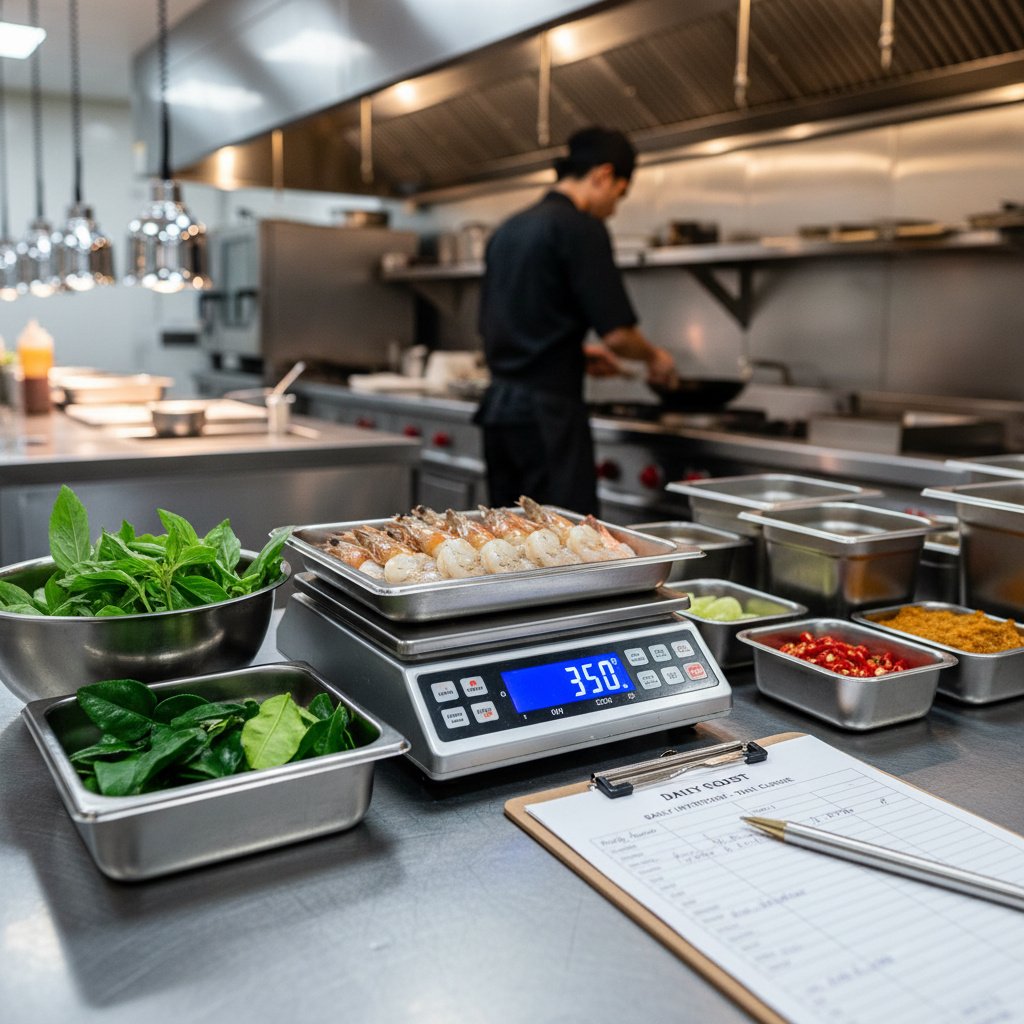
- The Daily Waste Log: Place a dedicated clipboard by the kitchen trash station. Every discarded item must be logged alongside the reason—whether over-prepped, expired, burned in the wok, or returned by a guest. Tracking the source of waste turns vague kitchen shrinkage into actionable operational data.
Cross-Utilization and Forecast-Driven Prep
Specialty ingredients that appear in only one single dish create dead stock and drive up spoilage. Smart menu design prioritizes cross-utilization, planning core ingredients across multiple recipes so stock turns rapidly.
For example, a master garlic-chili puree or a balanced house stir-fry base can serve as the foundation for drunken noodles, basil stir-fry, and spicy fried rice. Chicken trim can be simmered into rich broth bases for noodle soups. When an aromatic herb or vegetable works across three or four high-volume offerings, inventory velocity rises, lowering the risk of throwing out wilted produce.
Pair cross-utilization with structured batch prep schedules tied to sales forecasts. Prep levels for a rainy Tuesday lunch should look vastly different from a sunny Saturday evening. Forecasting prep prevents cooks from holding excess perishable items past their peak freshness.
Menu Engineering: Maximizing Item-Level Profitability
Menu engineering analyzes every offering on two distinct metrics: popularity (sales volume) and profitability (contribution margin). Categorizing your menu reveals clear operational actions:
- High Profit, High Volume: These are your menu champions (often fried rice varieties or vegetable curries). Highlight them with visual callouts, prime placement on print and digital menus, and verbal recommendations from front-of-house staff.
- Low Profit, High Volume: Classic favorites like Pad Thai or specialty seafood curries often fall here due to rising protein or noodle costs. Rework these recipes by moderating expensive garnishes, tweaking protein ratios, or introducing modest price adjustments to restore target margins.
- High Profit, Low Volume: Unique regional specialties or refreshing signature beverages. Improve descriptions, train servers on pairing suggestions, or run targeted limited-time promotions to drive guest interest.
- Low Profit, Low Volume: Dishes that are expensive to prep, rarely ordered, and prone to spoilage. These are prime candidates for immediate menu retirement.
Active Supplier Review and Strategic Purchasing
Wholesale prices on staple goods fluctuate constantly. Routinely review unit costs rather than broad case prices for primary kitchen drivers: jasmine rice, coconut milk, poultry, dry rice noodles, and fish sauce. Because these products touch nearly every ticket, even small price creep compounds quickly across weeks of service.
Establish relationships with multiple broadline distributors and local specialty Asian food purveyors. Compare pricing sheets regularly, request volume-based pricing tier breaks on dry goods, and inspect all arriving deliveries at the kitchen door for quality, weight accuracy, and missing items before signing invoices.
Building a Sustainable Cost System
Controlling costs in a Thai kitchen is not a single seasonal cleanup project; it is an ongoing operating rhythm. When operators unite precise recipe calculations, portioning discipline, organized inventory tracking, and strategic menu engineering, food costs shift from an unpredictable challenge into a reliable engine for long-term growth.
Book a 15 minute discovery call to find out more today at https://digifidelis.com/calendar/

0 Comments