
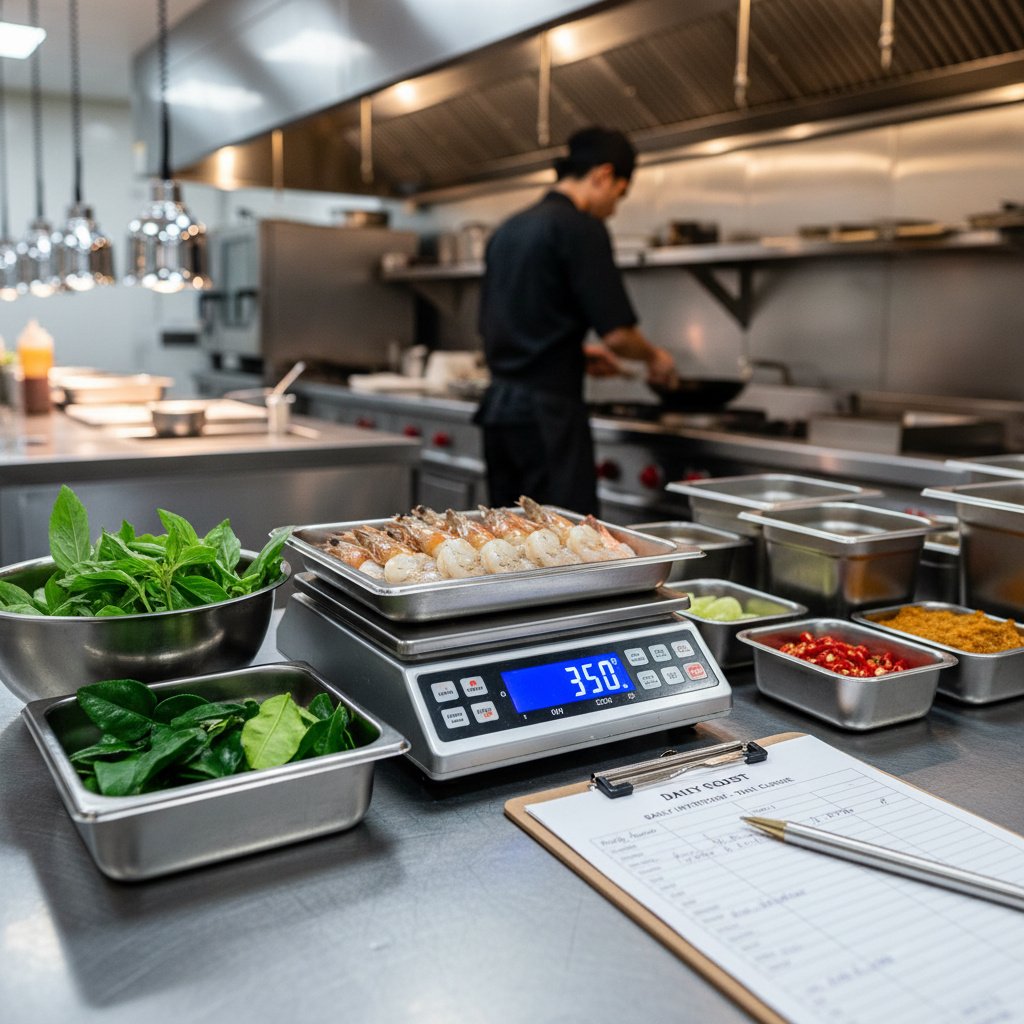
Behind the fragrant steam of simmering coconut milk and the fiery roar of wok burners, American Thai restaurant operators face an unrelenting operational truth: great hospitality alone does not ensure business survival. Many talented restaurateurs believe that crowded dining rooms and steady takeout bags guarantee a healthy bottom line. Yet, at the end of the month, profits slip away through unmeasured scoops of jasmine rice, rising import prices on curry pastes, and perishable herbs spoiling in the walk-in cooler.
Executing effective Thai restaurant cost management is not about diluting the rich culinary heritage of Thai cuisine or cutting corners on quality. Instead, it is about engineering financial precision behind every recipe. By treating food cost as an interconnected system encompassing recipe standardization, disciplined inventory control, strategic procurement, and menu engineering, operators can build a resilient, highly profitable Thai food business without compromising authentic flavor.
Setting the Financial Benchmarks
To control spending, you must understand your targets. In the American dining landscape, a healthy target for food cost control in Thai cuisine typically sits between 28 and 35 percent of total food sales. However, evaluating food cost in isolation often masks larger financial vulnerabilities. Savvy operators track prime cost—the combined total of cost of goods sold (COGS) and total labor costs—aiming to keep it strictly between 55 and 65 percent of gross sales.
Consider a busy weeknight where your kitchen sells three hundred bowls of Tom Kha Gai and Pad Thai. If prep cooks over-portion chicken breast by just one ounce per plate, that single dish bleeds nearly twenty pounds of protein into thin air over a multi-day cycle. Compounded over a full quarter, that small prep leak costs thousands of dollars in lost margin. When delivery packaging costs and third-party platform commissions are factored in, an unmonitored plate quickly turns unprofitable. Setting clear baseline percentages by category—curries, noodle dishes, stir-fries, appetizers, and beverages—gives leadership the clarity needed to spot variance before it consumes monthly cash flow.
Granular Recipe Costing and Yield Testing
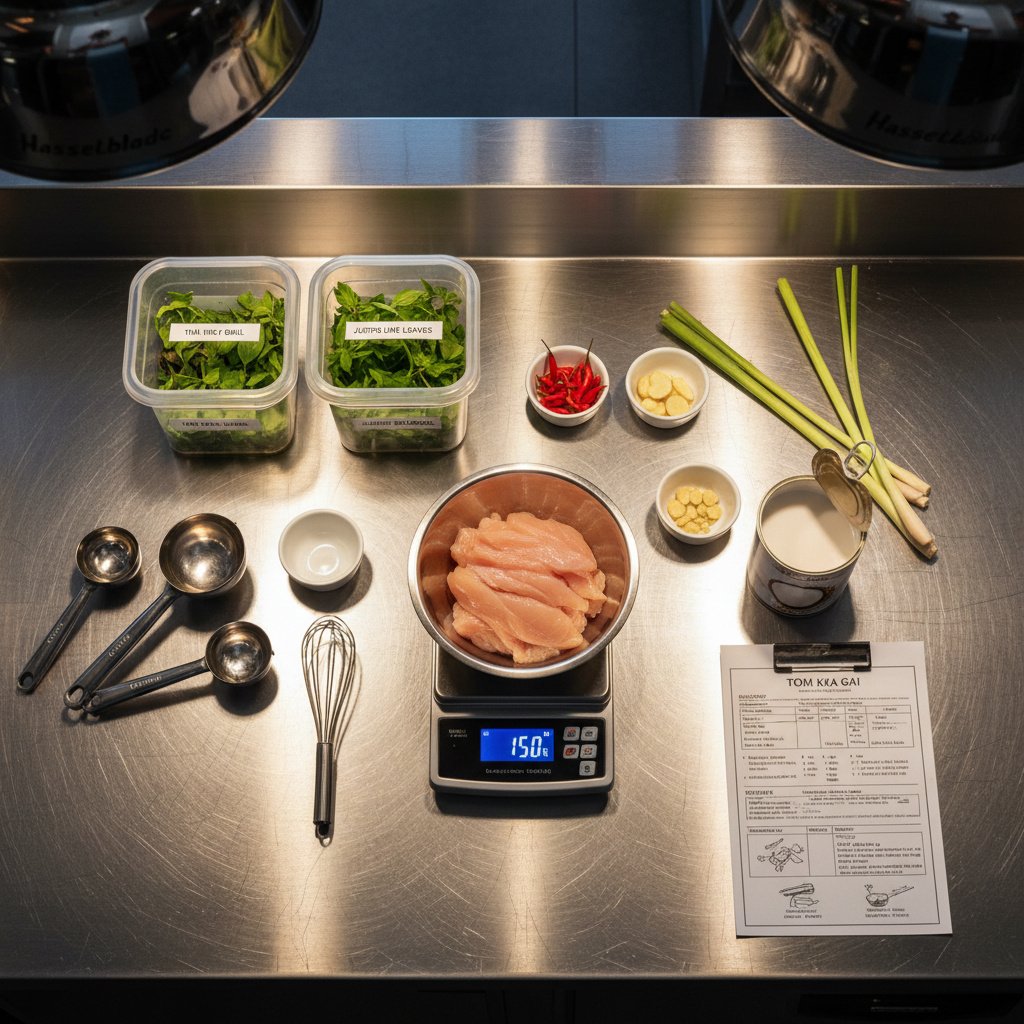
The core engine of cost stability is the standardized recipe card. Intuitive cooking is wonderful for home kitchens, but commercial scale demands absolute consistency. Every high-volume menu item must be mapped ingredient by ingredient, down to the exact grams of palm sugar, milliliters of premium fish sauce, and pinches of white pepper.
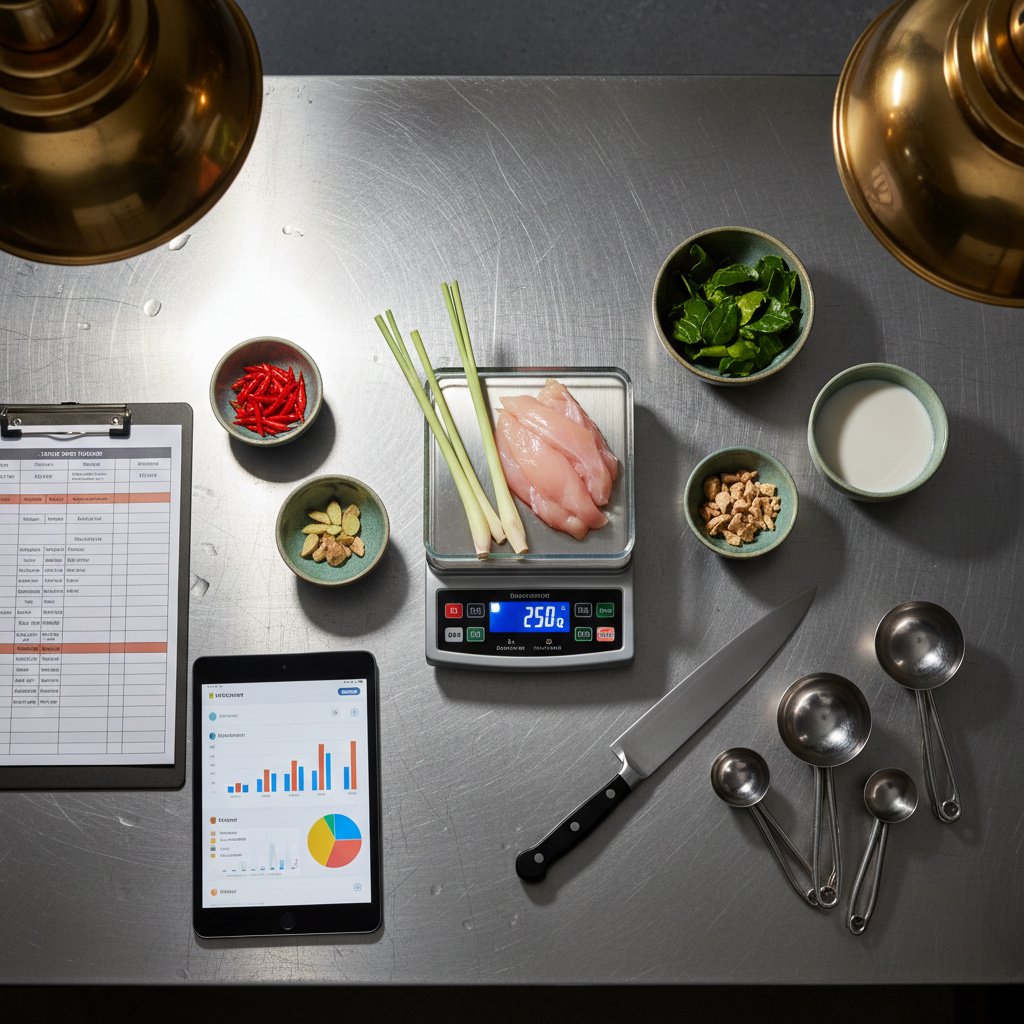
Begin by conducting rigorous yield testing. Raw purchasing weight rarely equals usable plate weight. Whole chicken tenders shrink during searing; lemongrass stalks require trimming fibrous outer layers; bulk bags of fresh Thai holy basil yield usable leaves only after stems are discarded. If you price a green curry based on the gross invoice weight of raw produce and proteins rather than the net edible yield, your theoretical food cost will inevitably fail to match reality.
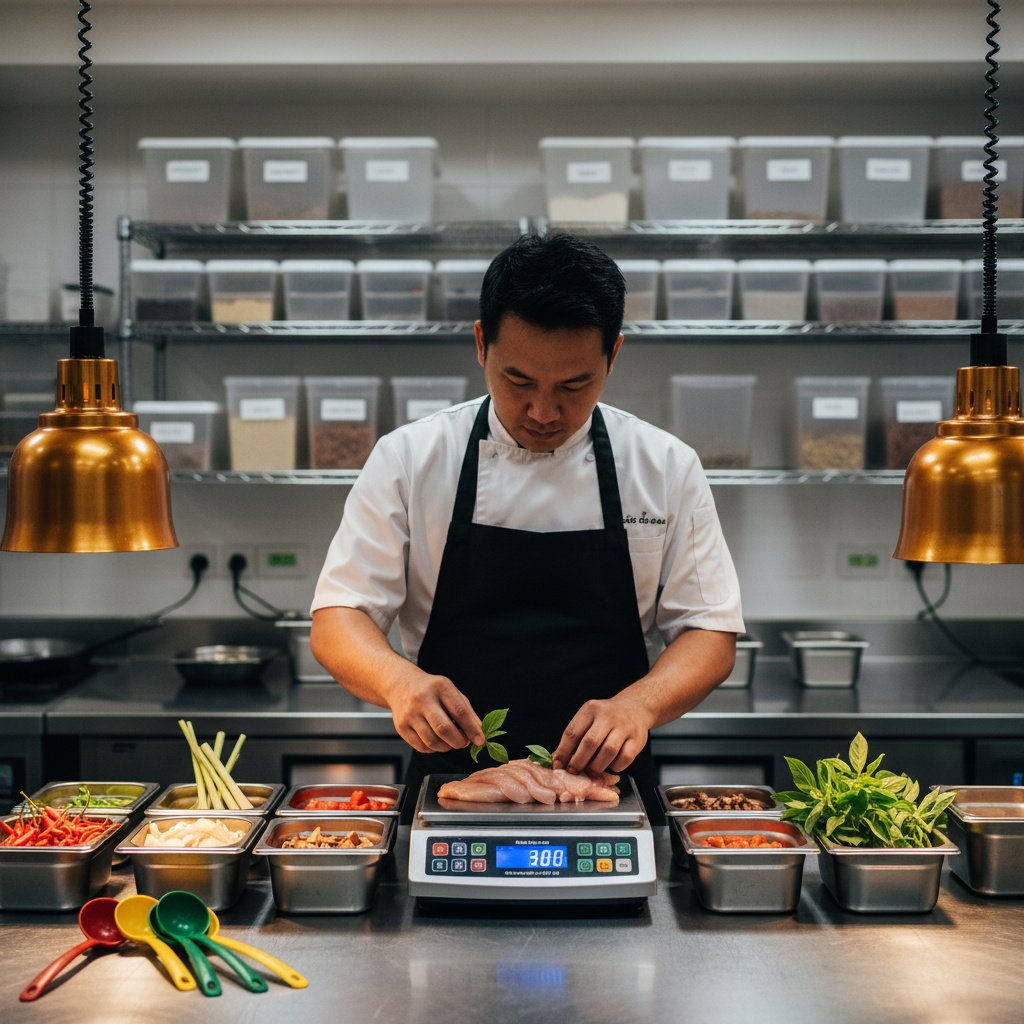
Establish exact portion weights on the line. Replace subjective scoops with dedicated ladles for base curry broths and designated weight scales for proteins like shrimp and sliced beef. Standardizing portions protects the dining experience while eliminating the silent profit erosion caused by generous, unmeasured hands during peak dinner rushes.
Tightening Thai Restaurant Inventory Management
A Thai kitchen handles a uniquely volatile mix of inventory: ultra-perishable fresh herbs like cilantro and holy basil, bulk dried goods such as rice noodles and jasmine rice, frozen proteins, and shelf-stable canned coconut milk. Without structured Thai restaurant inventory management, walk-ins quickly turn into dumping grounds for expired capital.
Implement a strict First-In, First-Out (FIFO) protocol across dry storage, walk-in coolers, and freezers. Date-label every batch sauce, thawed protein, and prepped garnish container clearly. Herbs must be stored with moisture-wicking paper towels in airtight cambros to extend shelf life from two days to seven. Portion bulk-purchased shrimp or sliced flank steak into pre-weighed, freezer-safe prep bags during morning shifts. This practice prevents repeated thawing, reduces cross-contamination risks, and instantly shows line cooks how many orders remain available for service.
Weekly physical inventory counts are essential. Reconcile what you purchased against what you actually sold through your point-of-sale system. When theoretical food cost and actual inventory usage diverge, it highlights prep errors, unreported kitchen waste, or unauthorized comps that require immediate coaching.
Proactive Procurement and Vendor Negotiations
Global supply chains frequently introduce price swings for imported coconut milk, jasmine rice, and specialty chili pastes. Successful operators do not passively accept invoice increases. To reduce costs in a Thai restaurant, you must track invoice pricing line by line every single week.
Build relationships with multiple regional and specialty Asian distributors to benchmark staple goods. If the cost of imported coconut milk jumps 15 percent, determine whether your purveyor can offer volume discounts across sister locations or alternate pack sizes. When wholesale costs rise permanently, re-cost your highest-volume dishes immediately. Choose between adjusting the recipe balance, altering the portion architecture, or adjusting the retail price rather than absorbing the expense in silence.
Furthermore, American takeout and delivery orders require operators to treat packaging as a direct plate cost. Premium tamper-evident containers, leakproof soup bowls, and branded paper bags can add $1.50 to $2.50 to an order. Build these packaging expenses directly into your menu pricing tiers or delivery surcharges so delivery volume strengthens your cash reserves rather than draining them.
Menu Engineering and Cross-Utilization
Your menu should work as an integrated matrix rather than an assortment of isolated recipes. The most effective cost-reduction exercise focuses directly on your top ten revenue-generating items. Because high-volume dishes represent the vast majority of weekly sales, optimizing them yields immediate financial relief.
Group menu offerings around shared prep components. A single master house stir-fry sauce can serve as the seasoned base for Pad Kra Pao, Pad Cashew Nut, and seasonal vegetable stir-fries, reducing preparation labor and stock complexity. Design dishes using a modular architecture: a standardized vegetable-and-carb base paired with customer-selected proteins. This pricing model clarifies specific protein margins and enables effortless substitutions when particular market commodities experience short-term inflation.
Tracking Waste and Closing the Execution Gap
Kitchen waste typically stems from three distinct breakdowns: purchasing mistakes, portioning errors, or execution mishaps on the line. To solve waste, you must record it systematically. Place a visible waste tracking sheet near the dishwashing and prep stations. Every scorched pot of peanut sauce, overcooked batch of rice, or dropped plate of Pad See Ew must be logged with its reason and estimated cost.
Reviewing these logs weekly reveals patterns. If line cooks constantly discard prepped flat rice noodles at closing, your batch prep pars are set too high for weekday volume. If herb trays frequently turn black before use, your procurement ordering threshold requires immediate tightening. Fixing these operational gaps transforms avoidable waste into preserved gross margin.
Building Long-Term Operational Resilience
Controlling costs is not an annual accounting chore; it is a continuous operational habit. The most resilient Thai restaurants evaluate their top sellers monthly, monitor supplier invoices weekly, and hold prep teams accountable daily through calibrated tools and clear yield metrics.
When you replace guesswork with measurement, your kitchen gains structural efficiency. You protect your kitchen staff from chaotic service runs, shield your business against inflation, and honor your culinary traditions with the operational excellence required to thrive for years to come.
Book a 15 minute discovery call to find out more today at https://digifidelis.com/calendar/

0 Comments