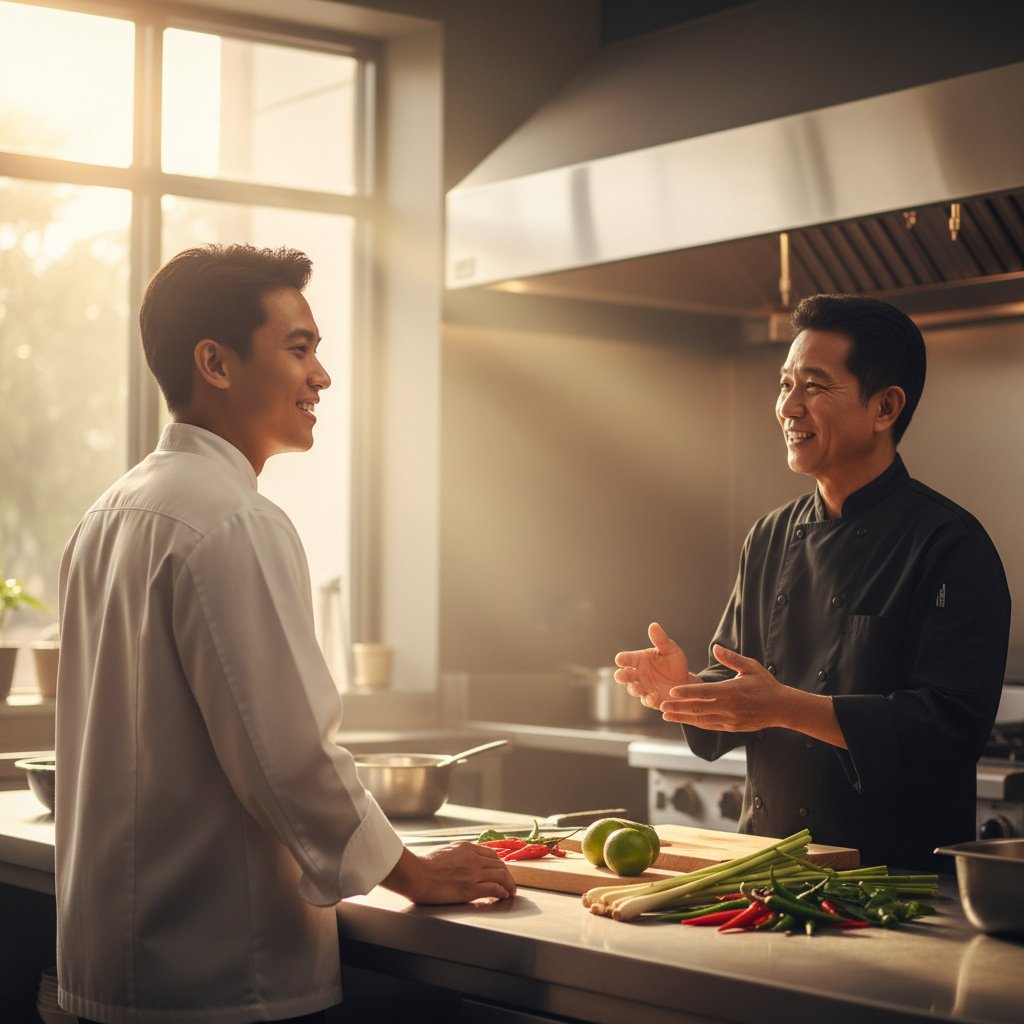
Have you ever walked into a bustling American kitchen, smelled the comforting aroma of toasted chilies and sweet basil, and wondered how you could turn your cooking passion into a steady paycheck? Landing your first job in a new country can feel like trying to আপনি যখন একটি ব্যস্ত আমেরিকান রান্নাঘরে প্রবেশ করেন, টোস্টেড চিলি এবং মিষ্টি বেসিলের আরামদায়ক গন্ধ পান, এবং ভাবেন যে কীভাবে আপনি আপনার রান্নার আবেগকে একটি স্থির বেতনে রূপান্তরিত করতে পারেন? একটি নতুন দেশে আপনার প্রথম চাকরি পাওয়া একটি গোপন ভাষা বোঝার চেষ্টা করার মতো মনে হতে পারে, বিশেষ করে যখন আপনি মার্কিন রেস্তোরাঁ শিল্পের মতো দ্রুত-গতির পরিবেশ নেভিগেট করছেন।
I remember chatting with a good friend who arrived in St. Paul, Minnesota, a few years back. She had spent a lifetime cooking in small family stalls back in Thailand, but in America, everything felt shockingly different. The high-speed kitchen equipment, the strict public health codes, the tax paperwork—it was completely overwhelming. She started small, taking low-wage cafeteria work and kitchen helper roles just to learn the local rhythm. She saved every spare penny, practiced her English during breaks, and slowly proved her absolute reliability to local owners. Eventually, she found an empty cafe space, kept the existing kitchen equipment, and opened her own successful Thai cafe. Our shared journey in this industry taught us that while the path is challenging, it is incredibly rewarding if you know the right steps.
Her journey is the classic American dream, but it did not happen overnight. It started with that critical, sometimes terrifying first step: getting hired. Whether you want to gain local experience or eventually build your own business, this guide outlines the practical, step-by-step roadmap to finding your footing and landing your first job.
Step 1: Understand Your Status and Target the Right Roles
Before you fill out a single application, you must ground your search in legal reality. There is a massive operational divide between domestic applicants and international job seekers. If you are already in the country with active work authorization—such as a green card, an Employment Authorization Document (EAD), or a student visa that allows part-time work—your primary challenge is simply finding a matching opening. The fastest route to success is pursuing entry level Thai restaurant work, such as prep cook, line cook assistant, dishwasher, server assistant, pantry help, or cashier.
Let us be completely honest about visa sponsorship: securing employer-backed visas for entry-level tasks is highly uncommon. U.S. immigration laws make hiring from abroad a costly, time-consuming process that standard family-owned independent restaurants rarely have the resources to pursue. Avoid agencies or online promises that guarantee quick, effortless work visas for simple kitchen help. Focus your energy on legal, transparent avenues. If you are an owner looking to hire, maintaining complete labor compliance protects both your business and the vulnerable newcomers who keep our culinary traditions alive.
Step 2: Translate Your Experience into “Kitchen Language”
American restaurant managers are highly practical people. They do not just want to hear that you “know how to cook Thai food.” They want to know exactly what you can handle on day one. You need to translate your back-home experience into specific, measurable skills that solve their immediate staffing headaches.
Instead of general statements, highlight your technical capability. Can you prep ten gallons of red curry paste to exact recipe specifications under a tight deadline? Do you have excellent knife speed and precision? Do you know how to operate a high-pressure commercial wok safely? Highlight your deep familiarity with critical ingredients like galangal, kaffir lime leaves, and shrimp paste. If you have cooked in multiple regions of Thailand, explain that you understand the nuance of Northern, Southern, or Central Thai culinary styles. This positions you as an expert who can protect the restaurant’s authentic brand flavor from your very first shift.
Step 3: Master Essential Kitchen English
Do you need flawless, unaccented English to start working? Absolutely not. Thousands of legendary chefs began their U.S. careers with only a few basic words. However, you do need to master the survival vocabulary of a hot, fast, and occasionally dangerous line. In a busy kitchen, communication is not about literature; it is about physical safety.
Make sure you practice and memorize essential kitchen commands before you step onto the floor. Phrases like “behind you” warn a coworker that you are passing with a heavy pot. “Hot pan” avoids a trip to the emergency room. Words like “allergy,” “rush order,” and “out of stock” keep the front-of-house and back-of-house synchronized. For restaurant owners reading this, you can drastically reduce training time and costly mistakes by printing simple bilingual onboarding sheets. Listing key terminology in both English and Thai builds immediate confidence for your new hires and ensures your kitchen dances to a safe, steady beat.
Step 4: Use the “Feet-on-the-Street” Search Method
While digital job boards are helpful, they can also act as digital black holes where resumes disappear forever. The hospitality business is built on physical presence and trust. If you are looking for the absolute best Thai job search tips USA has to offer, it is this: put on a clean, professional outfit, print out several copies of your resume, and visit local Thai restaurants in person.
Timing is everything. Do not walk in at 12:30 PM during the chaotic lunch rush when the manager is frantic. Instead, show up between 2:00 PM and 4:00 PM when the dining room is quiet and the kitchen team is prepping for dinner. Politely ask to speak with the manager, explain that you are reliable, hard-working, and ready to start immediately, and hand them your paperwork. Additionally, tap into your local community networks. Visit local Thai Buddhist temples, join regional expat social groups, and let your friends know you are actively looking. Word-of-mouth recommendations are still the most powerful hiring mechanism in our community.
Step 5: Build a Clean, Task-Based U.S. Resume
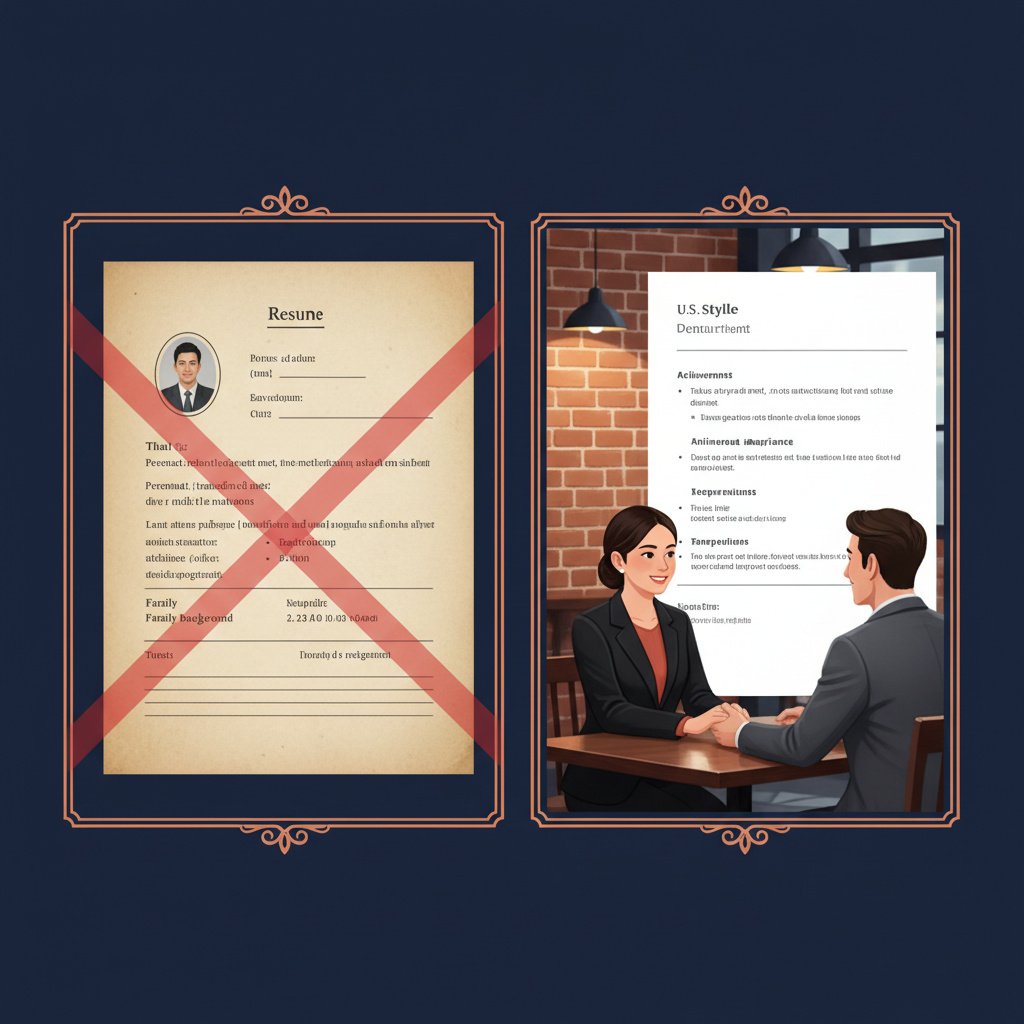
An American resume does not need to list every school you attended since childhood. It should be a compact, one-page document that shows an employer how you can help them run a smoother shift. Keep the layout simple, professional, and easy to read.
Clearly list your contact information, the kitchens or stations you have worked in, your specific food safety knowledge, and your availability. If you do not have formal restaurant experience, do not panic. Highlight your experience prepping food for family businesses, community catering events, or temple festivals. Be entirely honest, but frame the work professionally by detailing your speed, multitasking ability, and physical stamina. Most importantly, list one or two reliable references with their phone numbers. For U.S. managers, a brief phone call with a community leader or trusted former coworker who can speak to your work ethic is worth more than a dozen fancy diplomas.
Step 6: Ace the Hiring Interview
When you get called in for an interview, the owner is looking for two main traits: humility and adaptability. Every restaurant has its own unique house standards, even if they differ from the way your family cooked back home. Show the manager that you are eager to learn their specific recipes and system layout.
Many restaurant owners will ask you to participate in a “stage”—a brief, paid working trial where you help prep or clean for an hour. Treat this like an audition. Keep your station spotlessly clean, move with urgency, listen carefully to directions without talking back, and show that you are a team player. Your attitude during these few minutes will carry more weight than anything written on your application.
Simplify the Match with ThaiStaff.Now
Cold-calling restaurants and traveling from neighborhood to neighborhood can be exhausting. That is why modern technology is finally catching up to the needs of our community. For both job seekers and owners, utilizing ThaiStaff.Now job matching is an incredible way to fast-track the connection.
For expats, the platform takes the guesswork out of the search by matching your unique skills, language abilities, and locations directly with verified employers. For restaurant owners, it solves the constant struggle of high turnover and staffing shortages by delivering pre-screened candidates who respect and understand Thai food culture. It acts as an invaluable digital bridge, allowing you to focus on cooking great food rather than endless hiring cycles.
At the end of the day, securing your first job is about earning trust. By presenting your skills clearly, committing to safety, and utilizing targeted modern tools, you can build a stable, prosperous career in your new home.
Book a 15 minute discovery call to find out more today at https://digifidelis.com/calendar/

0 Comments