Ever walked into a bustling American kitchen, heard the deafening sizzle of hot woks, and suddenly realized you didn’t know the English word for “colander”? It is a dizzying, humbling moment that almost every newcomer in the culinary world shares.
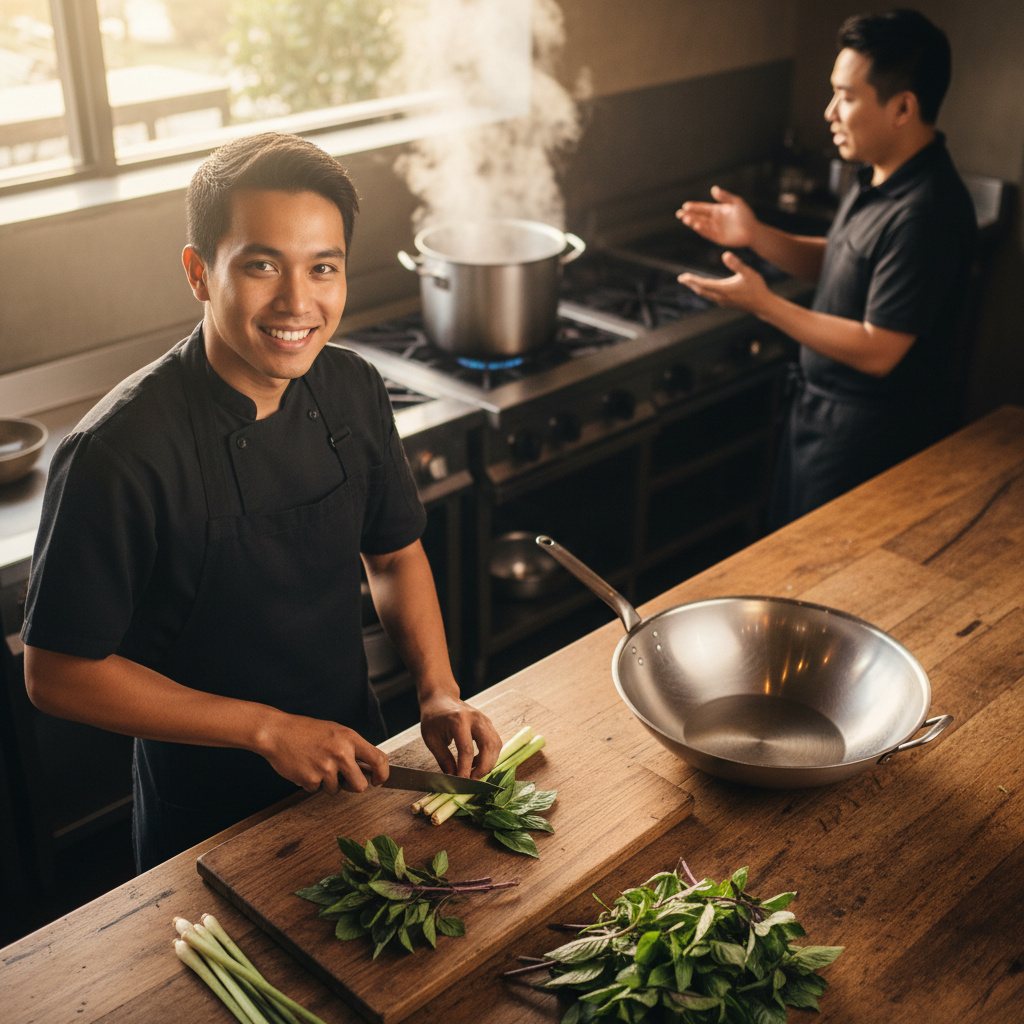
Take the story of Sunee, who landed in St. Paul, Minnesota, with a suitcase, basic English, and a deep appreciation for her homeland’s flavors. She didn’t start her journey as an executive chef or a glamorous front-of-house host. Instead, she took whatever shifts she could find—scrubbing prep tables in cafeterias, washing dishes, and working bars while slowly building her vocabulary. Step by step, she saved money, mastered local kitchen rhythms, and eventually turned that grueling entry-level labor into restaurant ownership. Her journey reflects a timeless truth: your first job is not a permanent destination, but a vital launching pad.
For thousands of newcomers, finding those initial Thai restaurant jobs USA has offers can feel like trying to decipher a map written in water. The temptation is to wait for the perfect culinary role to materialize. But the reality of the American market is that proving your immediate, practical utility on the floor or at the dish pit beats a polished resume every single time. Let us break down how to navigate this leap successfully, build your reputation, and turn your cultural familiarity into a genuine professional advantage.
Understanding the Demand: The Rise of Thai Flavors
Why is the market for your skills so resilient? Over the past few decades, a fascinating phenomenon known as gastrodiplomacy—specifically supported by Thailand’s efforts to popularize its cuisine globally—has established Thai food as a staple of the American dining habit. From bustling noodle joints in San Francisco to upscale eateries in Virginia, Americans love Thai food. This massive footprint means there is a constant, urgent demand for workers who understand the ingredients, the flavor profiles, and the cultural hospitality that makes these dining rooms special.
However, while your cultural fluency is a massive asset, U.S. employers prioritize operational reliability. Can you show up on time for a Friday night rush? Do you work well under high pressure when the ticket machine is printing endlessly? If you can combine your innate food knowledge with a stellar work ethic, you will quickly make yourself indispensable to busy owners.
Step 1: Target the Right Entry-Level Roles
If you are seeking your first job Thai expat America experiences show that aiming too high right away can stall your progress. Instead, look for entry level Thai restaurant work to build your local reputation. These foundational roles require fewer formal credentials and get you through the door quickly:
- Prep Cook / Cook’s Helper: Chopping vegetables, preparing sauces, and organizing ingredients so the line cooks can move fast.
- Dishwasher / Kitchen Porter: The absolute engine room of the restaurant; master this, and every cook in the kitchen will respect you.
- Server Assistant / Busser: Clearing tables, filling water, and helping servers stay on top of their sections while you observe American customer service.
- Cashier / Host: Great for those who want to practice their English skills rapidly while handling phone orders and welcoming guests.
Step 2: Master the Hyperlocal Job Hunt
While corporate jobs rely heavily on online portals, restaurant hiring is fundamentally local and hands-on. One of the best Thai job search tips USA veteran workers suggest is physically walking into neighborhoods with a high density of Thai-owned businesses.
Do not just email a resume; print out three clean copies, dress professionally, and visit the restaurant during their quiet hours—typically between 2:00 PM and 4:00 PM. Ask to speak briefly with the manager or owner. A direct, polite, in-person introduction shows an active initiative that no online application can duplicate. Be ready to explain your availability immediately, because managers often hire to solve an urgent staffing gap.
Step 3: Prepare Your Toolkit and Documents
Before you step foot in a restaurant, you must have your paperwork fully organized. Under U.S. federal laws, every employer is legally required to verify your eligibility to work. Be prepared to present valid proof of identity and work authorization right away.
Alongside your legal documents, prep a simple, one-page resume. Even if your experience is entirely back in Thailand, translate those duties into clear responsibilities: “managed inventory,” “prepared ingredients for high-volume service,” or “coordinated customer orders.” Keep it brief, honest, and focused on your reliability and willingness to learn.
Step 4: Tap Into Community and Modern Matchmakers
Never underestimate the power of word-of-mouth. The Thai expat community in the United States is tightly knit, and community centers, local temples, and regional Facebook groups are often informal job boards. Let friends, former colleagues, and acquaintances know that you are actively looking for work—many jobs are filled before they are ever advertised publicly.
Additionally, keep an eye on modern, emerging digital tools designed specifically to bridge the gap between workers and hospitality employers, such as ThaiStaff.Now job matching. Exploring these niche platforms can give you an edge by directly connecting you with owners who specifically value bilingual team members and authentic culinary familiarity.
Step 5: Survive and Thrive in the American System
Once you land the job, the learning curve truly begins. Operating in an American kitchen means adapting to several key systems quickly:
- Point-of-Sale (POS) Systems: Learn how the digital ordering systems work so you can process orders or read prep tickets accurately.
- Food Safety Standards: Familiarize yourself with local health department codes and prioritize getting your basic food handler’s certification (like ServSafe). It shows initiative and keeps the kitchen safe.
- Tipping Culture: If you work front-of-house, take time to understand tip-pooling and service standards, as American customers expect highly attentive service.
For Owners: Spotting Newcomer Talent
If you are a Thai restaurant owner reading this, you know how difficult it is to find loyal, hardworking staff. Newcomers like Sunee might lack local references, but they make up for it with drive, adaptability, and high trainability. When hiring, look past a lack of U.S. work history and focus on attitude, punctuality, and a willingness to start small. A prep cook who is eager to learn today is often your head line cook tomorrow.
The First Step of the Journey
Getting your foot in the door of an American restaurant kitchen is rarely about luck; it is a blend of persistence, preparation, and showing up ready to do the heavy lifting. You do not need to start your career at the top of the ladder. By securing a reliable entry-level role, proving your commitment to the team, and learning the operational systems of U.S. dining, you will set yourself up for long-term stability and eventual growth in your new home.
Book a 15 minute discovery call to find out more today at https://digifidelis.com/calendar/


0 Comments