Have you ever stood on a busy street corner in a brand-new American city, listening to the roar of unfamiliar traffic, and wondered how you are going to pay next month’s rent? It is a classic expat rite of passage. The excitement of arriving in the United States is quickly met with the reality of survival. For most newly arrived Thai expats, the fastest and most reliable path to financial stability starts in a professional kitchen.
The Golden Lull: A Quick Story
Consider the story of Lek, who arrived in Chicago from Chiang Mai with a suitcase, some basic English, and a ton of cooking experience from his family’s noodle stall. For his first two weeks, Lek sent dozens of generic, multi-page resumes to online job boards. He got nothing but silence. He felt like his background was invisible in this massive country.
Frustrated, Lek changed his strategy. He trimmed his resume down to one clear page, translated his past duties into terms American business owners understand, and walked into a bustling Thai bistro in a trendy neighborhood at exactly 2:30 PM—the quiet gap between the lunch rush and dinner service. He politely asked for the manager, handed over his paper resume, and explained that he could start immediately. He was hired as an entry-level prep cook on the spot. Lek’s breakthrough highlights a vital truth: landing your first job Thai expat America journey requires local tactics, not international bureaucracy.
Why the US Restaurant Industry is Your Best Gateway
For decades, professional kitchens have served as the starting point for newcomers securing their footing in America. Why? Because the restaurant industry values direct, observable skills over foreign academic credentials. In a kitchen, if you can prep ingredients quickly, show up on time, and work as a team, you are highly valuable from day one.
This reality makes Thai restaurant jobs USA candidates pursue incredibly attractive. It is an industry built on fast-paced work where language barriers can be managed through hard work, speed, and shared culinary knowledge. Furthermore, many Thai restaurant owners in US actively seek team members who understand the culture and flavors of Thailand, making your background a premium asset rather than a hurdle.
What American Employers Actually Look For
American restaurant owners are practical businesspeople. When looking to fill an entry level Thai restaurant work position, they generally look for three key attributes:
- Reliability: Can you show up on time for every scheduled shift?
- Work Ethic: Are you willing to help clean, prep, and do whatever it takes during a busy rush?
- Compliance: Do you have the proper legal work authorization to be legally employed in the United States?
One common mistake is overcomplicating your background. You do not need to show an employer that you managed a complex marketing team back home if you are applying to be a line cook. Instead, translate your past work into practical terms: mention your experience with guest service, high-volume kitchen prep, food safety awareness, or speed and accuracy in handling cash. Keep it focused, honest, and direct.
Building Your One-Page Ticket: The American Resume
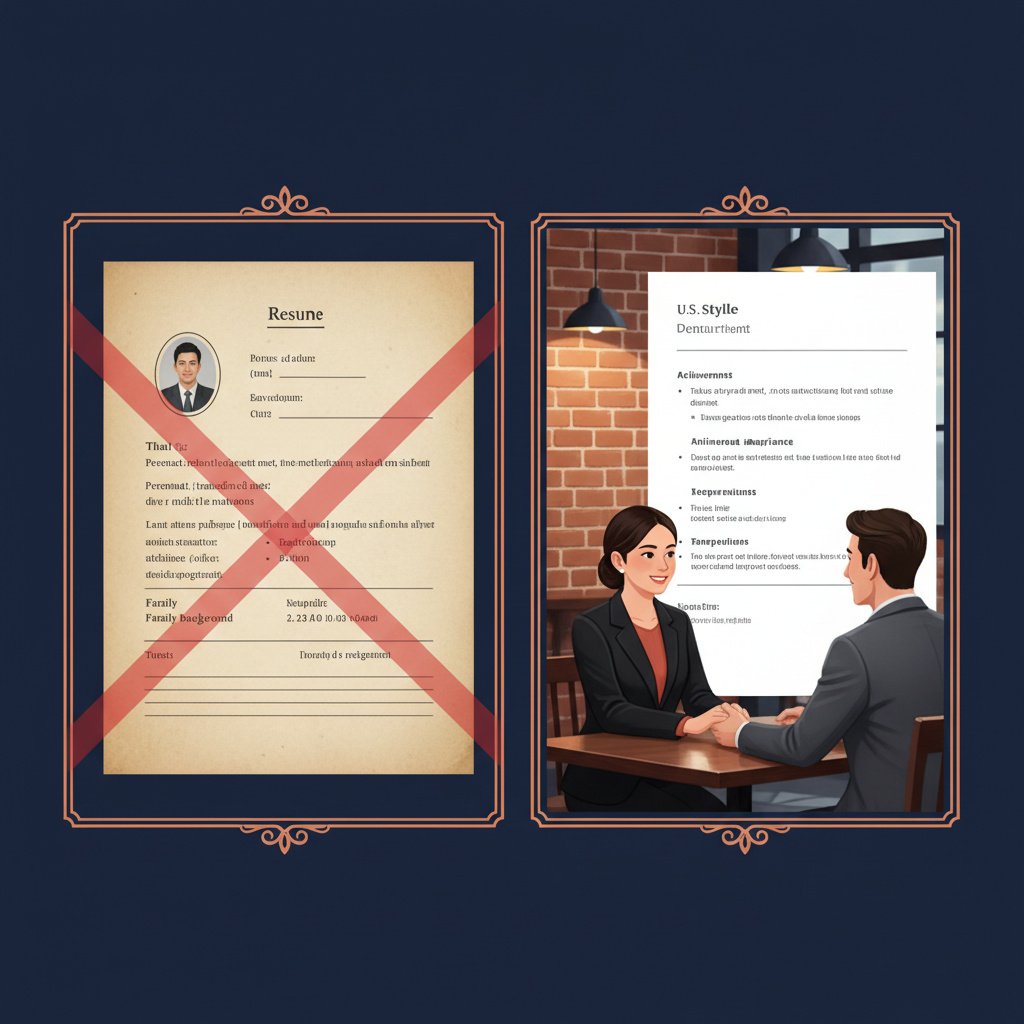
In the United States, restaurant employers rarely read resumes longer than one page. If your CV looks like a textbook, it will likely end up in the recycling bin. Here are some critical Thai job search tips USA candidates should follow when drafting their resume:
- Keep it to one page: Only list experiences relevant to kitchen or service work.
- Focus on roles and duties: Use terms like “Prep Cook,” “Line Cook,” “Server Assistant,” or “Dishwasher.”
- Provide local contact info: Make sure your US phone number and email address are correct and clearly visible at the top.
- List your availability: Showing that you can work weekends, late nights, or holidays can instantly double your chances of getting hired.
Where to Find Openings Quickly
The traditional job search can feel like shouting into a void, but there are smarter ways to navigate the landscape. Instead of searching random gig websites, narrow your focus to where the actual restaurant community gathers:
1. Local Thai Community Networks: Check neighborhood Facebook groups, temple bulletin boards, and local community hubs. Many jobs are filled through word-of-mouth before they are ever posted online.
2. Walk-Ins: Sometimes the old-school approach is the best. Walk into target neighborhoods during non-peak hours (typically 2:00 PM to 4:00 PM), dress neatly, and politely ask the staff if the manager or owner is hiring.
3. Advanced Job Matching Platforms: Platforms like ThaiStaff.Now job matching have revolutionized this process by bypassing traditional barriers. They connect job seekers directly with restaurant owners who need reliable, culturally aligned team members, removing the stress of cold-calling or waiting weeks for an email reply.
How to Excel in Your First Restaurant Interview
If a manager calls you in for an interview, they already believe your paper resume looks acceptable. The interview is simply a test of your attitude and energy. You do not need perfect English to pass, but you must project confidence, enthusiasm, and a cooperative attitude.
Prepare to answer basic questions regarding your work history, your availability, and how you handle stress. A great technique is to have a short “pitch” ready: “I am reliable, I learn fast, I respect kitchen teamwork, and I am available to work whenever you need me most.” This direct approach communicates maturity and readiness.
What to Expect in Your First 30 Days
The first month in any new US restaurant can feel like a whirlwind. The pace of American foodservice is famously high-velocity. You will likely be introduced to point-of-sale (POS) systems, specific food safety rules, and unique kitchen dynamics.
The key to surviving this initial block is observation. Watch how the veteran staff members move, organize their stations, and communicate during a rush. Ask clarifying questions early rather than guessing and making an expensive mistake. As long as you maintain a positive, solution-oriented attitude, your team will support your development.
Common Mistakes to Avoid
Many expat job seekers prolong their search by falling into easily avoidable traps:
- Applying only online: Online systems can filter you out automatically. Combine your digital search with real-world applications or dedicated platforms like ThaiStaff.Now job matching.
- Targeting the wrong role: If your English is still developing, avoid front-of-house roles like server or host initially. Target back-of-house (BOH) roles like prep cook or dishwasher, build your confidence, and transition later.
- Failing to follow up: Restaurant managers are incredibly busy. If you applied on Tuesday, call or visit again on Thursday to politely remind them of your interest.
Your Path Forward
Securing your first role in an American restaurant is about showing up with a clear plan, a structured resume, and a willingness to learn. By taking a proactive approach and utilizing modern, targeted matching platforms, you can bypass the confusion and quickly land a stable, rewarding job that launches your new life in the United States.

0 Comments