Ever stood in the middle of a bustling American city, smelled the sweet, sharp aroma of jasmine rice and fried garlic drifting from a kitchen door, and felt an instant wave of homesickness? For many Thai expats newly arrived in the United States, that familiar scent isn’t just a reminder of home. It represents opportunity. But how exactly do you cross the threshold from the sidewalk into your very first shift?
When I first arrived in the US years ago, my English was shaky, my pockets were light, and the sheer scale of American paperwork felt like trying to climb a mountain in flip-flops. I remember walking into a small family-run noodle shop in Chicago, clutching a printed resume with trembling hands, wondering if I’d just get laughed out the door. The owner didn’t laugh. She gave me a glass of ice water, asked if I could start washing dishes that night, and changed the trajectory of my life in America. If you are looking for that same foot in the door, you do not have to wander the streets hoping for luck.
Landing your first entry level Thai restaurant work in the USA is a time-tested rite of passage. The Thai restaurant community in America is incredibly tight-knit, forming a powerful, self-sustaining network. Yet, navigating the American job market requires a mix of traditional cultural respect and modern digital street-smarts. Here is your practical, step-by-step roadmap to secure your first shift and start earning.
Step 1: Get Your Paperwork and Priorities Straight
Before you even think about stepping into a kitchen, you need to understand the rules of the road. To work legally in the United States, you must possess a valid Social Security Number (SSN) or an Individual Taxpayer Identification Number (ITIN), alongside an active work authorization document. While it is tempting to look for shortcut arrangements, working legally protects your wages, your safety, and your long-term immigration status in the country.
While you wait for your official documents to process, use that time to obtain your food handler’s safety certification. Most states require restaurant workers to have a basic food handler card within 30 days of hiring. Taking a quick, budget-friendly online course like ServSafe shows potential employers that you are serious, professional, and ready to work on day one without needing basic safety training.
Step 2: Know the Roles and Choose Your Entry Point
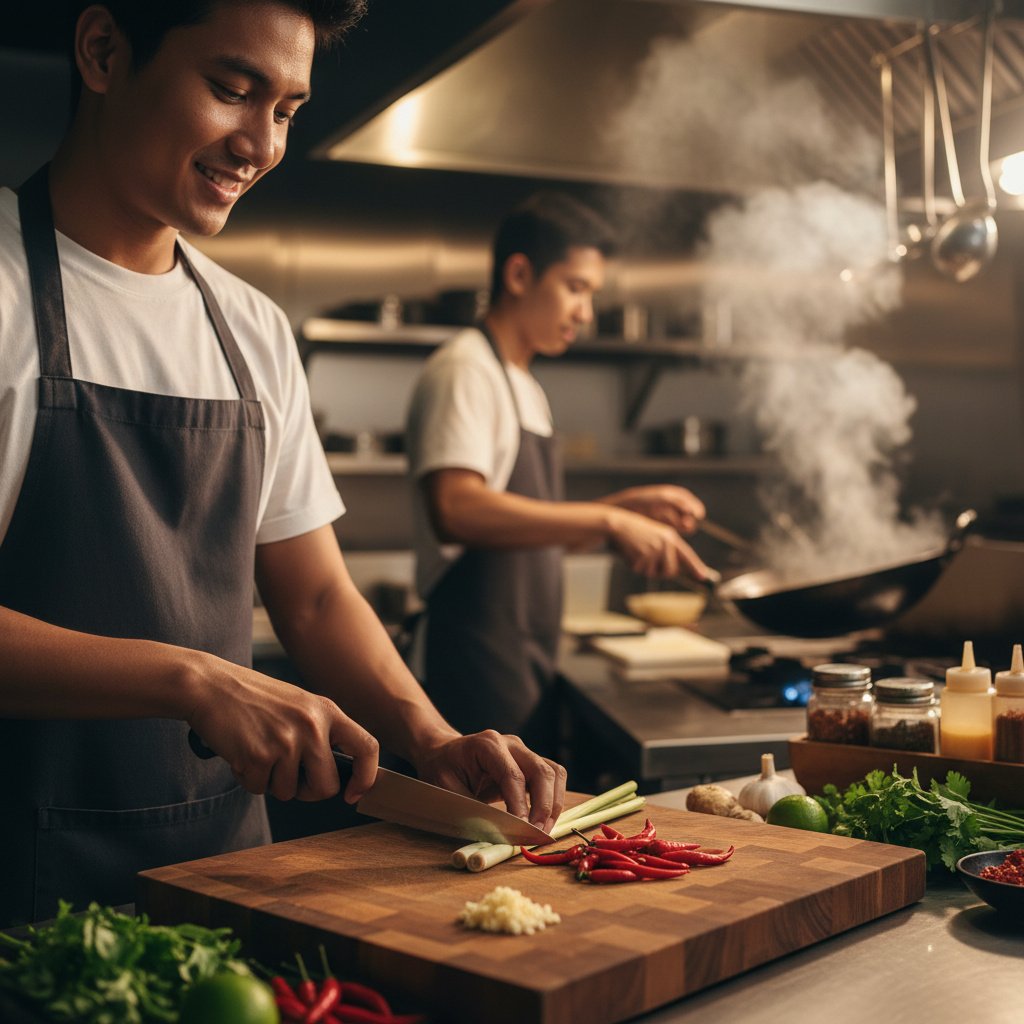
What kind of Thai restaurant jobs USA employers offer match your current skills? If your English is still developing, do not worry; the kitchen is a universal language. You can start in the “Back of House” (BOH) as a dishwasher, prep cook, or kitchen helper. These roles are intense and fast-paced, but they are the absolute best places to learn the rhythm of an American kitchen without the pressure of customer interaction.
If you feel confident speaking English, you might aim for “Front of House” (FOH) roles like a busser, food runner, or host. These positions put you face-to-face with customers, helping you polish your language skills and earn a share of tips. Be honest with yourself about your current comfort level. It is far better to start as an exceptional prep cook and work your way up than to burn out as a stressed-out server on your first busy Friday night.
Step 3: Master the Modern Thai Job Search Tips USA
The days of relying solely on physical bulletin boards in Asian supermarkets are shifting. While walking into restaurants during quiet hours (usually between 2:00 PM and 4:00 PM) to ask for the manager is still highly effective, the digital landscape has revolutionized how Thai expats find work. You need to leverage specialized platforms designed specifically for our community.
Instead of getting lost in the endless noise of giant, general job boards, smart expats are turning to niche networks like ThaiStaff.Now job matching services. These platforms bridge the gap between Thai restaurant owners who need reliable talent and expats searching for their first big break. By creating a profile that highlights your reliability and availability, you bypass the traditional gatekeepers and connect directly with businesses that value your cultural background and work ethic.
Step 4: Prepare for the Trial Shift (The “Namjai” Test)
In many Thai-American restaurants, the interview process is incredibly hands-on. Do not be surprised if an owner asks you to do a short trial shift, often called a “stage.” They want to see how you move in a kitchen, how you handle hot plates, and most importantly, how you interact with the rest of the team. This is where the Thai concept of namjai (hospitality and water from the heart) comes into play.
During your trial, show initiative. If you see a dirty counter, wipe it down. If the trash is full, take it out. Ask questions if you do not understand an order, rather than guessing and making a mistake. American restaurant owners love workers who are proactive, puncture-proof under pressure, and quick to smile when things get chaotic. Your attitude during these few hours will speak far louder than any resume ever could.
Your Next Steps to Success
Landed your first chat with a manager? Keep your eyes open, show up fifteen minutes early, and wear clean, non-slip shoes. Every successful Thai restaurateur in America started exactly where you are standing right now—looking at a kitchen door, feeling a mix of nerves and excitement. The community is ready to welcome you, but you have to take the first step.
Are you ready to stop searching aimlessly and find your perfect match? Sign up for a job-matching service like ThaiStaff.Now today, set up your profile, and let the right opportunities find you. Your first American paycheck is closer than you think.
Book a 15 minute discovery call to find out more today at https://digifidelis.com/calendar/


0 Comments